Nostalgic Retail Series #45 - DISCOVERY CHANNEL
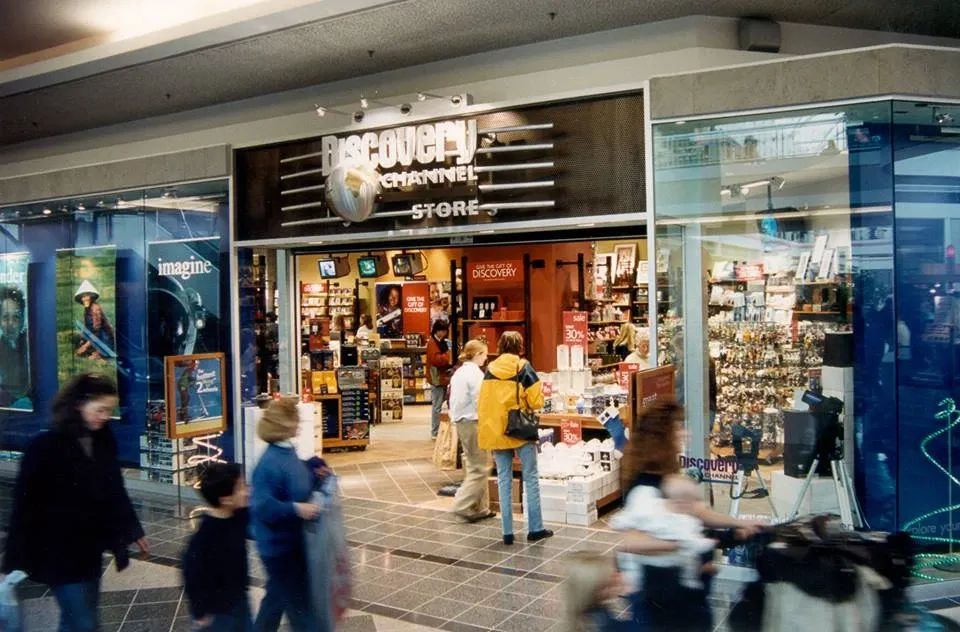
𝟭𝟲𝟱 𝘀𝘁𝗼𝗿𝗲𝘀. 𝗧-𝗥𝗲𝘅 𝘀𝗸𝗲𝗹𝗲𝘁𝗼𝗻𝘀. 𝗧𝗲𝗹𝗲𝘀𝗰𝗼𝗽𝗲𝘀. 𝗟𝗼𝘀𝗶𝗻𝗴 $𝟯𝟬 𝗺𝗶𝗹𝗹𝗶𝗼𝗻 𝗮 𝘆𝗲𝗮𝗿.
If you walked through a mall in the late 90s, you probably stopped at the Discovery Channel Store. Fossils. Science kits. Nature documentaries on VHS.
Discovery Communications built it as a brand extension. Retail as marketing. It worked. Until it didn't.
A Timeline:
- 1995: Discovery Channel Store launches with 11 locations.
- 1996: Discovery acquires The Nature Company's 110 stores for $40 million. Rebranding begins.
- 1998: 30,000 sq ft flagship opens in Washington, D.C. - T-Rex skeleton, WWII bomber nose, 82-seat theater. $10 million over budget.
- 2000: Chain peaks at 165 stores. Ranked #1 most trusted brand in America.
- 2007: 𝘋𝘪𝘴𝘤𝘰𝘷𝘦𝘳𝘺 𝘢𝘯𝘯𝘰𝘶𝘯𝘤𝘦𝘴 𝘤𝘭𝘰𝘴𝘶𝘳𝘦 𝘰𝘧 𝘢𝘭𝘭 103 𝘳𝘦𝘮𝘢𝘪𝘯𝘪𝘯𝘨 𝘴𝘵𝘰𝘳𝘦𝘴. 1,000 employees laid off; 25% of the company's workforce.
Lessons Learned:
- Brand extension doesn't guarantee retail success. Disney and Warner Bros. tried the same playbook. Most failed.
- $30 million in annual losses couldn't be justified as "marketing spend" forever. New CEO Dave Zaslav was brought in to cut costs. Retail was first on the chopping block.
- The product was experiential, but the economics weren't. Selling telescopes and fossils at mall rents doesn't scale.
Discovery Channel's online store survived. The airport locations out-lived the mall locations briefly through a partnership with Hudson Group, but met the same fate.