The AI Invasion: Saviors, Snake Oil, and the New Black Box

Every conference. Every pitch deck. Every vendor demo. The message is the same: AI will save you.
Faster decisions. Smarter insights. Automated everything. The hype is real. And honestly? Some of it is more than deserved. AI is transforming how we work. But here's what nobody wants to talk about: most of these "solutions" won't survive the next three years.
The Saturation Point
Scroll through LinkedIn right now. Every other post is someone hawking an AI solution. Conferences are 90% AI-focused. Internal strategy meetings? AI. Google searches for business tools? AI everywhere. That should tell you something.
When everyone is selling the same thing, we're not at the beginning of a wave. We're at the peak. And we're about to come out the other side.
The Gold Rush Problem
Right now, thousands of companies are slapping "AI-powered" on their product. Some are building something real. Most are wrapping an API call in a pretty interface and calling it innovation. The barrier to entry is low. The differentiation is thin. And when that happens, competition doesn't just heat up. It cannibalizes itself.
We've seen this movie before. Remember the early days of SaaS? Hundreds of CRMs. Dozens of project management tools. A handful survived. The rest became footnotes. AI is following the same script. Just faster.
The Speed Trap
Here's where it gets tricky: speed matters. First-mover advantage is real in this environment. Organizations that figure out how to deploy AI effectively will pull ahead of competitors still stuck in evaluation mode.
But speed without substance is a trap.
Moving fast on bad data gets you bad answers faster. Deploying technology that doesn't let you ask the right questions means you're automating confusion. And if the outputs aren't accurate, intelligent, and actionable? You've just accelerated your way into a mess.
First-mover advantage only works if the foundation is solid. Speed built on shaky data and opaque technology will backfire.
The New Black Box
Here's the twist: the survivors won't necessarily be the best. They'll be the ones with distribution, capital, and stickiness. And for the rest of us? We'll be left trusting systems we don't fully understand.
That's the uncomfortable truth about AI adoption. Most organizations can't afford to build from the ground up. They don't have the data infrastructure, the engineering talent, or the runway to create proprietary models. So they buy. They integrate. They hope.
And what they get is a black box.
Not the old black box, the one where you didn't understand the algorithm. This is a new black box. One where even the vendors building it can't fully explain why it made a particular recommendation. One where "trust the model" becomes the default answer. One where the line between insight and hallucination gets dangerously blurry.
The Trust Paradox
This is where it gets interesting. AI inspires two contradictory emotions: excitement and suspicion. We're thrilled by what it can do. We're terrified by what it might get wrong. And we're adopting it anyway, because the fear of falling behind is stronger than the fear of making a mistake.
That's not irrational. But it is risky.
The Tortoise Wins
It's easy to buy into the hype. To sprint toward the shiny new thing because everyone else is running. That's the hare mentality. And in this race, the hare loses.
Slow and steady wins, but not the way you might think. This isn't about being cautious to the point of paralysis. It's about being deliberate. Nimble. Flexible enough to pivot when the landscape shifts.
The organizations that will win aren't the ones who adopt fastest. They're the ones who adopt smartest. The ones who ask hard questions before signing contracts:
- What data is this model trained on?
- How does it handle edge cases?
- What happens when it's wrong, and who's accountable?
- Can we audit the outputs, or are we just trusting the dashboard?
Most vendors can't answer those questions clearly. That should tell you something.
The Shakeout Is Coming
Within the next 24 months, we'll see a wave of AI consolidation. The underfunded will fold. The undifferentiated will merge. The overhyped will quietly pivot. The "realities" will not match "the promises." And the market will be left with a handful of dominant players. Some good, some just well-capitalized.
For buyers, that means two things:
- Be skeptical of "AI-first" pitches. The technology matters less than the problem it solves and the team behind it.
- Build optionality. Don't lock yourself into a single vendor's ecosystem. The landscape is shifting too fast.
And?
AI isn't going away. It's going to reshape every industry. But the hype cycle is peaking. And when the dust settles, we'll look back and realize that most of the "saviors" were just noise.
The winners will be the organizations that approached AI with clear eyes: excited about the potential, cautious about the promises, and disciplined about the execution. The ones who moved with purpose, not panic. The tortoises who stayed nimble.
In 24 months, half these vendors will be gone. Will you have built something real, or just bought into the noise?
IN THE NEWS
Retail Construction Slows Nationwide in 2026
"US retail construction drops, with 2026 supply below average as costs, supply limits, and demand challenges slow development."
AI Doesn't Replace Human Judgment in Retail Real Estate - Where We Buy #375 (Video)
"Paul Sill uses data and predictive analytics to help retailers, restaurants, and other brick-and-mortar businesses make site selection decisions. Paul explains the critical difference between correlation and causation in retail data, explaining that misreading data can lead to costly mistakes."
"Retailers prioritizing experience over function gaining an advantage."
Third Point abandons CoStar investment in wake of squabble
"After publicly criticizing the company’s management and spending on Homes.com, activist investor Third Point has sold its ownership stake in CoStar Group."
America Isn’t Overbuilt—It’s Misbuilt: Rethinking Commercial Real Estate
"For years, the prevailing narrative in commercial real estate has been simple: America is overbuilt. Too many offices. Too many strip malls. Too much supply chasing too little demand. But that diagnosis misses the real problem. America isn’t overbuilt. It’s misbuilt."
Nostalgic Retail Spotlight: A&P
I am currently posting a series on nostalgic retail on LinkedIn and have compiled it all on a website. Want to see what you have missed? Click HERE
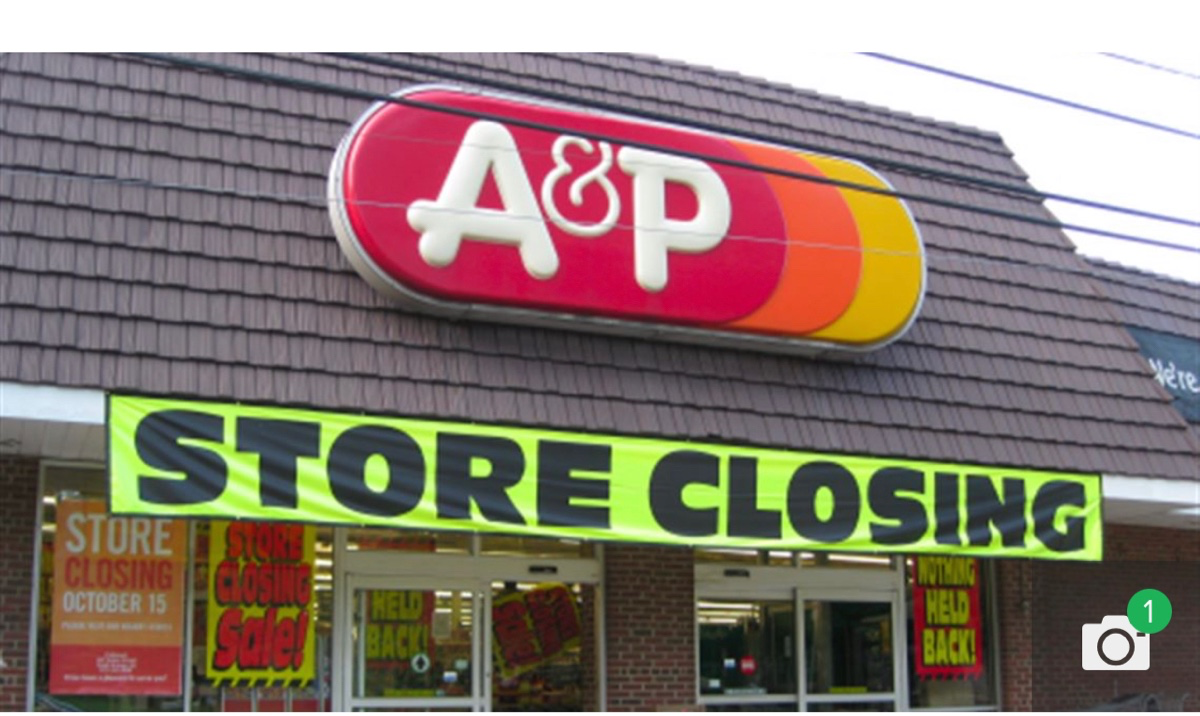
The Great Atlantic & Pacific Tea Company, better known as A&P, started as a mail order business around 1859.
By 1920, there were 4,500 stores; by 1930, 15,000. In 1936, in Braddock, Pa., A&P opened a “supermarket.” By the 1950s, A&P was, briefly, what Walmart is now, the nation’s largest retailer, with a 75 percent share of America’s grocery business (sounds like a grocery monopoly to me!!). The chain filed for bankruptcy in 2010 and 2015, with the last store closing in 2016.
A&P became stale and never adjusted to consumer’s moving to the suburbs and their changing shopping habits. Remember, when you are #1, there is nowhere to go but down!
Its legacy: The chain created Woman’s Day magazine in the '30s to showcase recipes and ingredients available in-store. (source: Good Housekeeping)
R.I.P A&P (lots of letters…right?)