The Whitespace Blindspot

Where location intelligence goes blind, and why the dataset built to fix it needs a careful hand, especially in the white and gray areas.
Every foot traffic platform can show you a store dying, one quiet month at a time. None of them can tell you what to build in its place.
That gap is about to get expensive, because the industry is walking straight into it.
Two months ago I ran an edition called "Your Center Isn't Performing. Supply Is." The argument was simple. Nobody's building. Just 2.1 million square feet of retail delivered in the first quarter, the active pipeline now under 0.3 percent of existing inventory, and Colliers looking for another 37 percent drop this year. Available space has dried up, the math behind ground-up development stopped clearing, and the industry did the rational thing. It stopped building and started repurposing.
Dead department store anchors become apartments. Vacant big boxes become medical suites, self-storage, or a pickleball operator paying rent nobody underwrote three years ago. Adaptive reuse is the growth story right now, because there is almost nothing left to lease.
Here is the trap.
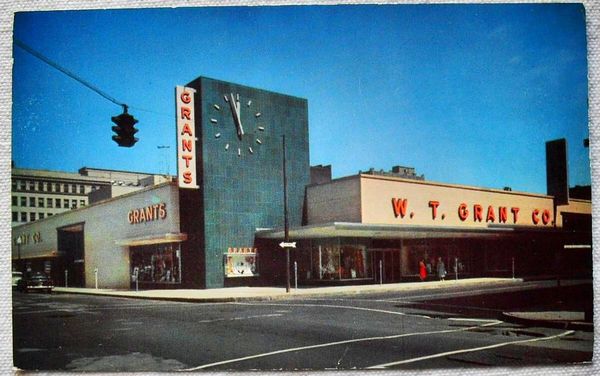
When you underwrite a conversion, you pull the location data on the site. And that data can only describe the use you are tearing out. It shows you the traffic to the tenant that failed. That is the entire file. A record of the patient, dated the week before the funeral.
Now drop 300 apartments where the Sears was. Those residents move and spend nothing like the shoppers the data remembers. Worse, the history actively points you the wrong way.
And that's the shallow end of the problem. The deep end is raw land.
A conversion at least hands you a building and the neighborhood that grew up around it. You know who lives within three miles or a 10-minute drive time. You know the roads, the competing centers, the daytime population. Some of that carries over.
Greenfield gives you none of it. A site at the edge of the growth line has no store to measure and no residents yet to do the measuring. There is nothing for a foot traffic platform to observe. You cannot measure a trip no one has taken to a place that does not exist.
So what do you actually underwrite on? Building permits. Rooftop projections. The entitlement pipeline. A DOT traffic count on a road the county might widen in 2029. Useful inputs, all of them. Also the exact same forecasting real estate has done for forty years, dressed up in a nicer dashboard.
Here is the pattern once you see it. Your location data is sharpest where the decision is easy, a net-new store dropped beside an identical one in a trade area you already know cold. It goes dark exactly where the decision is hard and the dollars are biggest, the projects that redraw the map instead of filling in a corner of it.
And be honest about which tool is the worst offender here. It is the one already on every desk. Mobile location data is the most popular input in site selection, which makes it the most over-extended. It was built to measure places that exist, and it gets asked, every day, to vouch for places that don't. That is the misuse that does the most damage, simply because it is the most common.
Which is precisely when the industry reaches for the dataset that promises to solve all of this. Persona data. Psychographic segmentation.
The pitch is seductive, and for a whitespace problem it sounds like the answer. This data is anchored to people, not to storefronts. It profiles who lives in the ring, the block group, the zip code, whether or not a single store has ever opened there. No POI required. Is it, finally, the dataset that works where there is nothing to measure?
Partly. And this is the part I want to be fair about, because it matters.
Persona data is one of the most useful tools we have ever had in this business. Past patterns really do predict future behavior. Knowing a household's tendencies, what they value and how they respond, genuinely sharpens a forecast. Layer it onto solid ground truth and it may be the single best predictor in the toolkit. I am not telling you to throw it out. I am telling you where it gets dangerous, and it gets dangerous alone.
Look at how it gets built. The modern psychographic systems are assembled from observed behavior, mobile movement, social activity, card spend, clustered into segments and projected back onto households. That is a strength most of the time. It is also the catch. The prediction works by assuming tomorrow rhymes with yesterday. In a stable trade area, that is a safe bet. In a conversion, or on raw land, where the whole point is that the use is changing or does not exist yet, the assumption quietly breaks. The data still answers with total confidence. It just answers the wrong question.
So it carries the same blind spot as everything upstream of it. It hides that better, because the output looks forward even when the input only looks back.
There is a second thing to watch. Persona data is strongest at telling you who is there and weakest at telling you what they will do at a use that has never existed on that spot. Composition is not capture. Treat the first as if it were the second and you end up confidently wrong.
And the signal thins out exactly where you need it most. The richest behavioral data lives in dense, young, high-engagement geographies. The exurban edge and the aging inner-ring suburb, the two places doing the most conversion and greenfield, are where that signal is weakest. The dataset is thinnest precisely at the sites where the decision is hardest, which is also where it will sound most authoritative.
Here is the failure mode, and I have watched it happen. A persona report gets pulled to justify a site that was already chosen, and because it reads like foresight, nobody pushes back. The data did exactly what it was built to do. The mistake was ours, asking one instrument to carry a decision that needs several.
None of this makes the data bad. Compared to a census ring and a gut call, psychographic segmentation is a genuine leap, and used alongside other data it earns its price and then some. The best predictor we have is still only a predictor, and only when it rides with other signals. On its own, pointed at a use that does not exist yet, it stops predicting and starts flattering.
AI makes it worse. Feed a model every layer at once, mobile, persona, spend, and it returns one clean, confident answer without ever flagging which input was blind on this particular site. The model averages the gaps into something that reads like certainty. Garbage in, gospel out.
So here is where it leaves us.
Your location data is honest about the past and strongest when the future rhymes with it. Persona data included. It is sharpest on the current and historical calls and softest on the ones that redraw the map. The whole skill is knowing which call you are making. A stable trade area rhymes with its own history. A dead anchor becoming apartments does not. Raw land past the growth line does not.
So use every layer you can get. Mobile data, persona, spend, demographics, all of it, especially where they overlap and check each other. Then, in the white and gray areas, where the models go quiet or start to guess, fill the gap on purpose. The permitting reality nobody uploaded. The read on a neighborhood no segment can capture. The judgment a dashboard cannot sell you.
Call it what it is: knowing exactly where the data stops seeing, and refusing to let a confident number stand in for that knowledge.
So before you underwrite the next dead box or break ground past the growth line, ask the question the dashboard will not: do you know where your data goes blind, and what are you using to see in the dark?
IN THE NEWS
Retail held its ground in Q2 - Cushman & Wakefield's Q2 2026 MarketBeat shows net absorption back in positive territory at 708,000 square feet, with national vacancy at 6.0 percent, still more than a point below the long-run average. Almost no new supply, low vacancy, rents grinding up.
The backfill economy - Store openings are on pace to outrun closings for the first time since the pandemic, per CoStar and Coresight. The growth is coming from off-price, beauty, and discount grocery backfilling vacated boxes rather than new construction, with Aldi alone adding 180-plus stores. The conversion story in one trend line.
Experiential Retail: What Works Now and What Doesn’t - (Subscriber Access Only) - "With product sales now often relegated to online outlets, however, competitive retail destinations need to provide another level of experience to make an in-person visit worth consumers’ time and effort."
Retail Watch List: shoppers go mini - The Consumer Collective tracks shoppers trading down to smaller sizes and packs as budgets tighten. Also flagged: the EU's ban on destroying unsold clothing and footwear, in effect since July 19.
CoStar bets on data, not the chat window - CoStar launched an AI search interface built on its own data, wagering that the depth of the underlying data is the edge, not the interface on top.
Restaurants continue to struggle with traffic amid consumer cautiousness - "This year is shaping up to be marginally better than last year for the restaurant industry, but not by much as both operators and their customers are coping with rising costs and muted confidence."
Nostalgic Retail Spotlight: JoANN
Want to browse the entire Nostalgic Retail Series and see back editions of The Corner of Main and Main? Click HERE
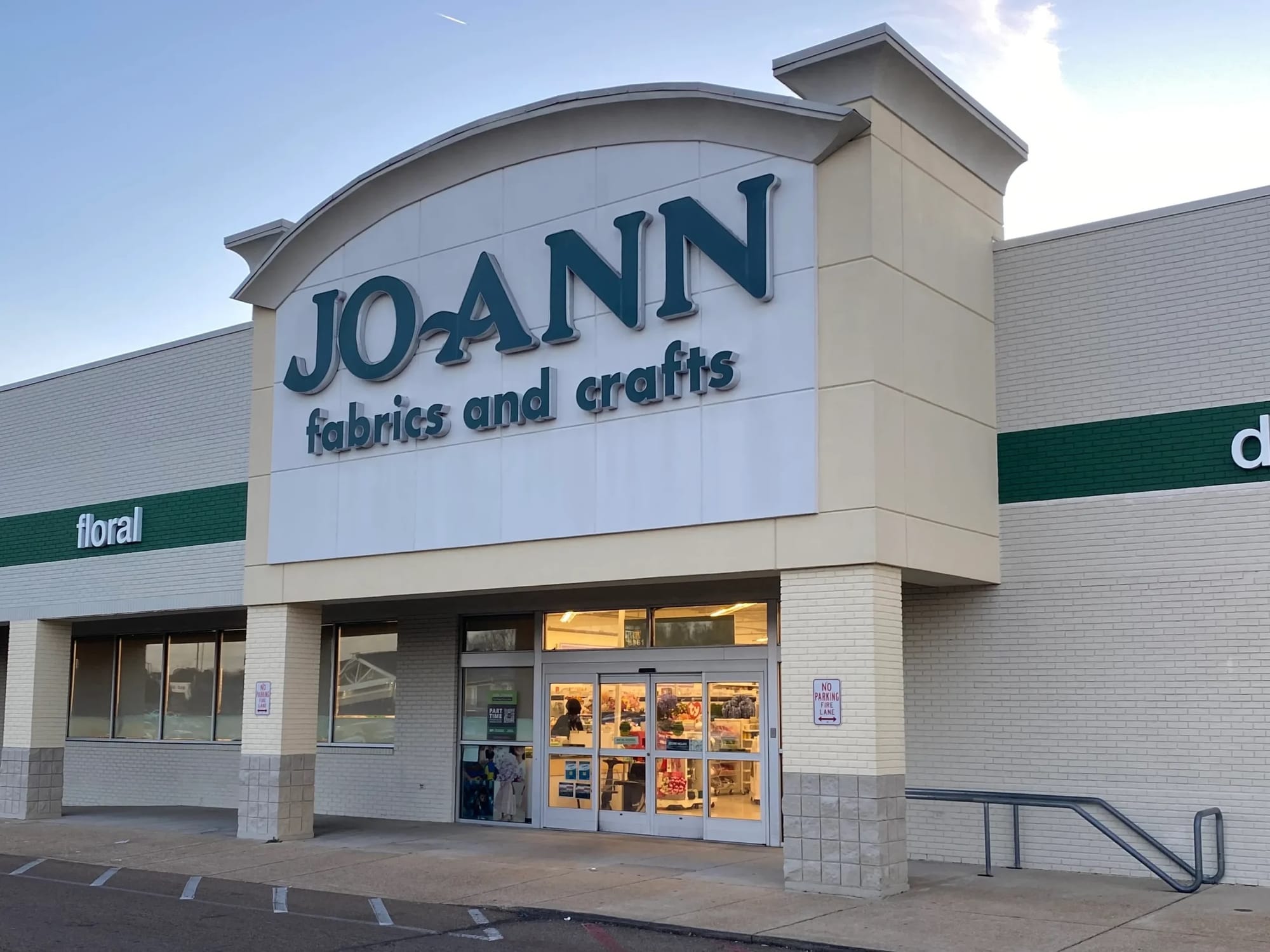
Eighty years. Roughly 800 stores. The largest fabric-and-crafts retailer in the country, dark in a single spring.
The easy story is that crafting fell out of fashion. There is some truth in it. But plenty of specialty retailers survive a soft category. What JoAnn could not survive was its balance sheet.
JoAnn filed Chapter 11 in March 2024 carrying about a billion dollars in debt, secured $132 million to keep the lights on, and emerged a month later owned by its lenders. That restructuring reset the debt clock. It did nothing for the economics of a 15,000 square foot box selling low-margin thread against Amazon and Temu. Eleven months later, in January 2025, the second filing landed. This time there was no rescue. A February auction handed the assets to a liquidator, and by the end of May every store was dark.
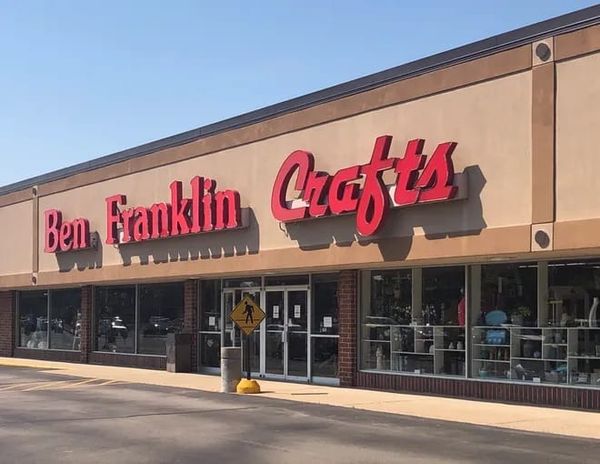
The CRE lesson is sitting in strip centers right now. Those roughly 800 mid-boxes hit the market inside a single year, and off-price, beauty, and discount grocery are backfilling the good ones first. Which is exactly the problem this issue is about. The foot traffic on a dead JoAnn tells you how a fabric store died. It tells you nothing about whether a HomeGoods or an Aldi belongs there next.