Nostalgic Retail Series #59: W.T. GRANT
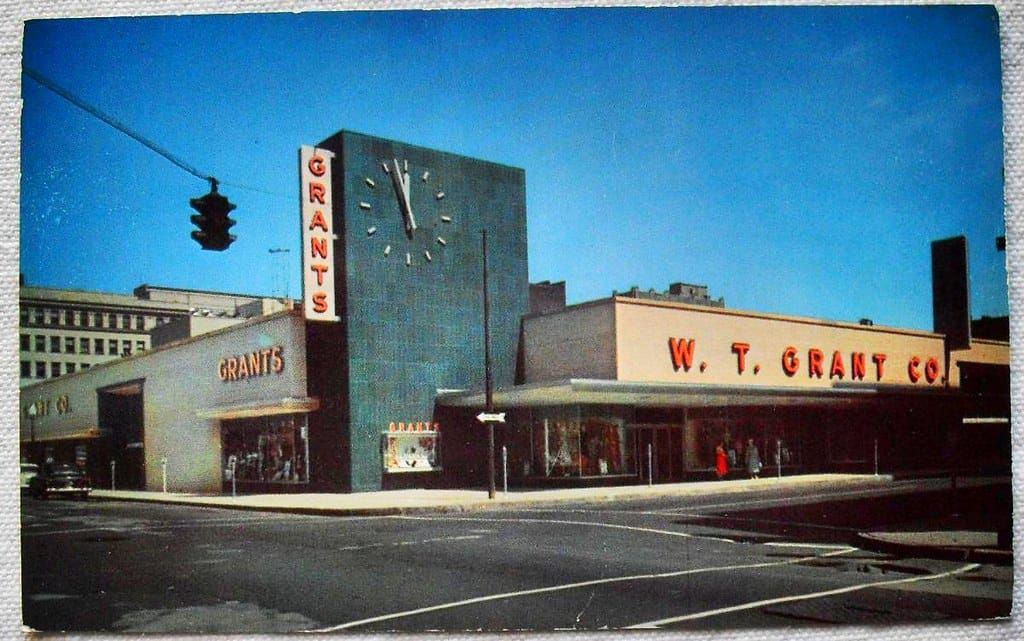
Grants sat somewhere between the five-and-dime and the department store. It had a Bradford House restaurant inside and Bradford brand electronics in the back. Near the end, the clerk at the register was told to hand you a credit application whether you asked for one or not.
William Thomas Grant opened his first 25 Cent Store in Lynn, Massachusetts in 1906 with $1,000 he saved as a salesman. Thin margin, fast turns. That model carried the company for sixty years. Then Grant started selling on credit to nearly anyone who walked in, and the store quietly became a lender.
Timeline:
- 1906: First store opens in Lynn.
- 1936: Sales near $100 million.
- 1958: Opens a 17,500 SF store in Anaheim. Ten years later it moves to an 86,800 SF box in the same center.
- 1969: Credit offered to every customer with no credit check and low minimum payments. Store credit managers open the accounts. No central records.
- 1972: W.T. Grant dies at 96. The chain is at nearly 1,200 stores.
- March 1974: Moody's withdraws the commercial paper rating. By October, 143 banks sit in a $600 million loan agreement.
- Oct 2, 1975: Files Chapter XI with 1,069 stores. Second largest U.S. bankruptcy at the time, behind Penn Central.
- April 1976: Adjudged bankrupt and liquidated. $276.3 million in customer receivables sells for $44 million plus 5% of first-year sales.
On paper, Grant looked fine until about 1970. The cash told a different story ten years earlier. James Largay and Clyde Stickney went back through the numbers in 1980 and found Grant hadn't generated cash from its own operations in the decade before it failed. Four years before the filing, the stock hit record highs. Earnings held steady. Receivables and inventory ate the cash. Management borrowed to keep paying the dividend.
The dirt was fine. Kmart took over many Grant stores in 1976, including one in Brighton, Michigan, a market it had passed on building in. Same boxes, no loan book behind the register. That's the landlord lesson. A sales report tells you what rang up. It doesn't tell you what got paid for. The company is gone, but the William T. Grant Foundation, started in 1936, is still funding youth research.
Did your family carry a Grants card?