Nostalgic Retail Series #57: KINKO'S
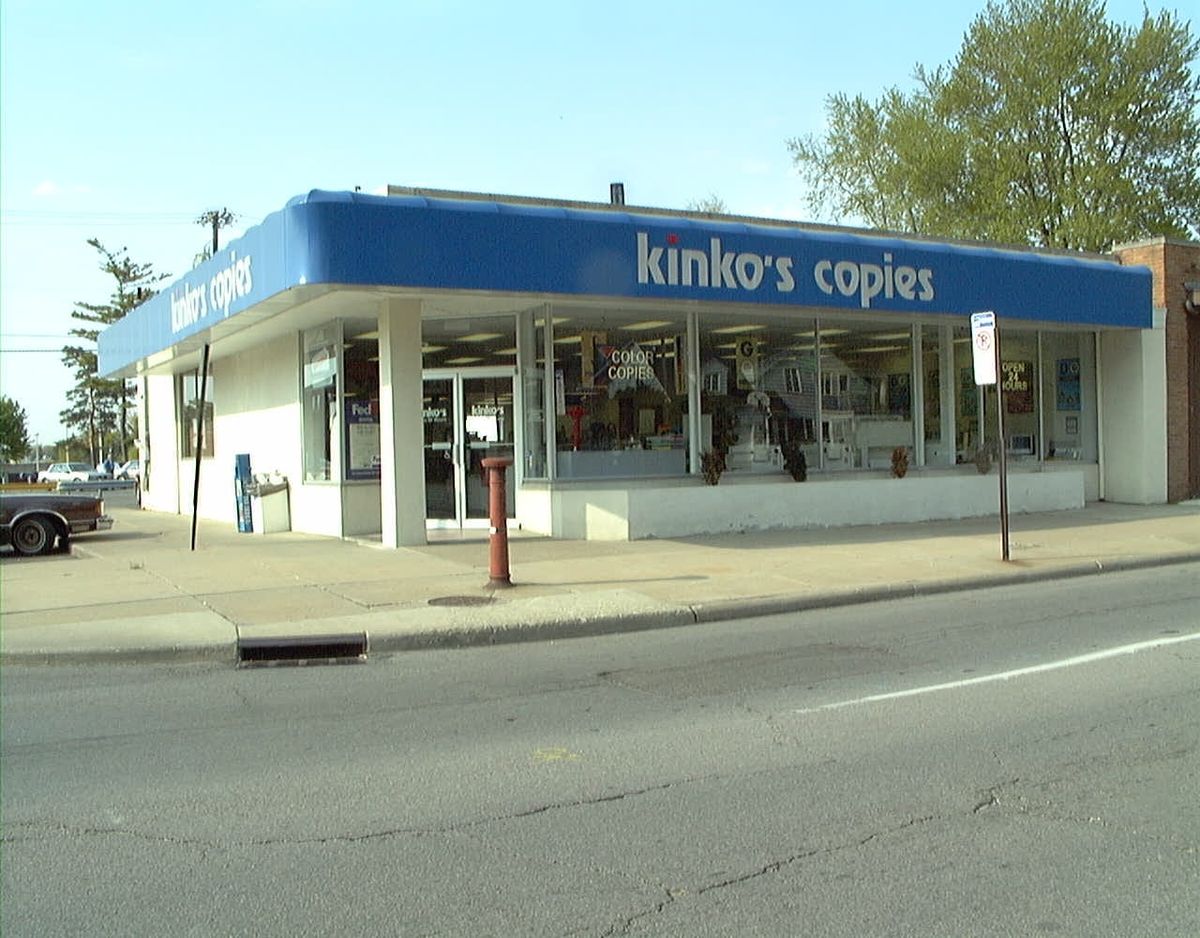
For about thirty years, if you needed 500 copies at 2 a.m., a fax sent across the country, or a resume that didn't look like it came off a dot-matrix printer, you went to Kinko's.
Paul Orfalea opened the first one in 1970: a 100-square-foot storefront next to UC Santa Barbara, one copier, a $5,000 loan his parents co-signed. The nickname was his, for the curly red hair. He never franchised it. He built the chain as a web of separate partnerships, one between him and each operator, and told them to experiment on price and hours. By the mid-90s that loose federation ran roughly 1,200 stores. Kinko's became the back office for every small business and freelancer who didn't have one. Open all night. The closest thing the 80s and 90s had to coworking.
Timeline:
- 1970: First store opens next to UCSB. One machine.
- 1978: A partner opens near the University of Georgia. The college-town playbook goes national.
- 1996: Clayton, Dubilier & Rice pays $214M for a 30% stake and starts rolling 127 separate partnerships into one company.
- 2000: Orfalea leaves after a fight with CD&R.
- Dec 2003: FedEx announces a $2.4B all-cash deal, the largest in its history. Only 134 of the 1,200 stores offered FedEx shipping.
- Feb 2004: Deal closes. Kinko's becomes FedEx Kinko's. The 24-hour model starts to disappear.
- June 2008: FedEx retires the Kinko's name for FedEx Office and takes an $891M impairment charge. $515M of it was just walking away from the brand.
FedEx bought 1,200 street-level counters to push ground shipping to small businesses and mobile workers. The copying was incidental, and the copying was already dying. Email, the PDF, and the home printer disintermediated the entire reason anyone drove to a copy shop at midnight. The demand that filled those stores evaporated. The boxes stayed.
The real estate outlived the reason it was built. A tenant can post full occupancy and healthy traffic while the reason customers show up is quietly disappearing underneath it. By the time the foot-traffic data turns, the use is already gone. The strongest asset in the Kinko's deal was the box, not the business inside it.
Are you old enough to remember a midnight trip to Kinko's during college or to get a work presentation printed out?