Sales Was Never the Warning Light
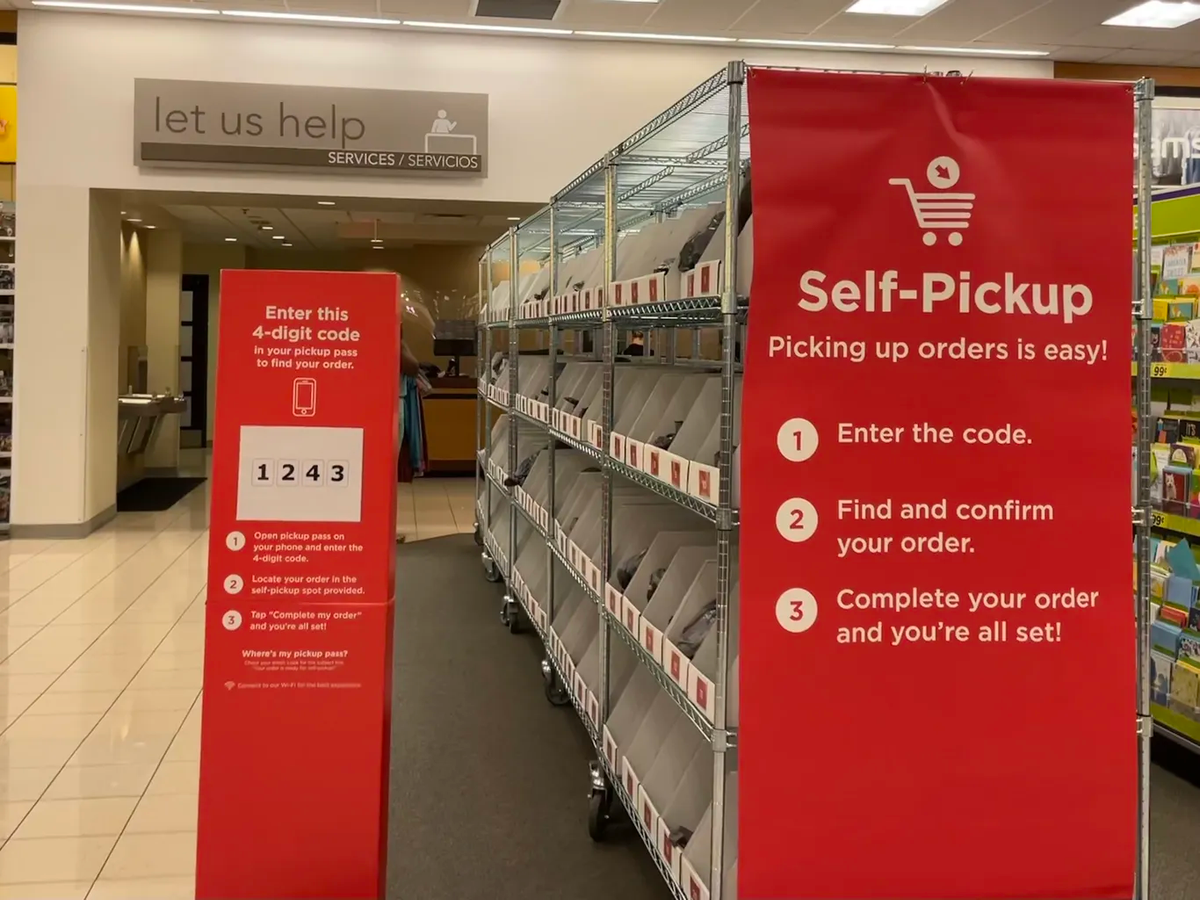
I walked into a Nordstrom Rack recently, and a large chunk of the front of the store was sealed off. It wasn't a remodel or a pop-up. It was boxes, stacked and waiting for pickup customers.
That space is still in the denominator of the store's sales per square foot. It's still in the lease, and the landlord still sees it as selling floor. It stopped being selling floor a while ago.
The Store Picked Up New Jobs
A store used to do one thing: sell what was on the floor. Now it does at least three more, and none of them show up cleanly in a sales report.
It's a pickup counter. U.S. click-and-collect sales were an estimated $154.3 billion in 2025 and are projected to reach $177.9 billion in 2026, up 15.3%.
It's a returns desk. Retailers expected $849.9 billion in merchandise to come back in 2025. When shoppers ranked their favorite places to drop off returns, 42% named the retailer's own store.
It's a media channel. U.S. retail media spend is forecast to reach $71.09 billion in 2026, and more of it is moving onto the store floor. CVS expects about 11,000 in-store screens this year, with checkout ads in roughly 7,000 stores.
Each of these jobs takes space, labor, or traffic. None of them fit into the number landlords use to judge whether a tenant is healthy.
Sales Was Never the Warning Light
In my previous role, we worked with a lot of retailer payables data. One pattern showed up again and again: you could never tell a retailer was in trouble from how it paid for inventory. Retailers paid their inventory bills on time, right up until the day they couldn't. By then it was too late.
Sales was sometimes the warning. Often it wasn't. A retailer could post steady top-line numbers while the margin underneath was eroding through markdowns, freight, labor, or debt service.
Now add the store's new jobs to that picture. Pickup orders take floor space and labor while the sale may get credited somewhere else. Returns flow back through the counter, and depending on how the lease defines gross sales and how the retailer books refunds, they can land as a deduction against the store that processed them. Media revenue runs on the store's traffic and never touches the sales report at all.
Sales was already an imperfect signal. It's getting noisier every year.
The Denominator Problem
Sales per square foot has its own issue. Retailers are shrinking the selling floor to make room for pickup staging and last-mile fulfillment, like that front section of the Rack. The square footage in the lease stays the same. The square footage actually selling gets smaller.
So a store can do its new job well and look worse on paper for it. More pickup volume means less floor, which means lower sales per foot, which reads like decline.
It Was Always About Profitability
The question that matters is whether this store makes money for the retailer, and whether it will keep making money. Sales was a proxy for that answer because it was the number landlords could see.
The new jobs make the proxy worse in both directions. A store with soft sales might be a highly profitable fulfillment node the retailer will never close. A store with solid sales might be losing money under the surface, and the first sign will be a missed rent check.
Landlords will rarely get the P&L. What they can do is stop treating one number as the answer. Combine traffic trends, changes in how the box is being used, pickup activity you can observe, co-tenancy performance, and the retailer's corporate health, and you get a far better picture than sales per square foot alone.
The boxes at the front of that Nordstrom Rack are a data point. So is a new pickup lane, a bank of screens, or a returns counter that's busier than the registers.
And in many cases, the only way to see what's really happening is through "boots on the ground." If landlords aren't walking their properties (and inside these stores), there is no way to get a full picture...not with data and definitely not with AI.
Are you reading the whole store, or only the part that's still selling?
Make sure to check out my Nostalgic Retail Series as well and head down memory lane while getting a glimpse into retail lessons from the past.