𝐍𝐨𝐬𝐭𝐚𝐥𝐠𝐢𝐜 𝐑𝐞𝐭𝐚𝐢𝐥 𝐒𝐞𝐫𝐢𝐞𝐬 #60 - 𝐌𝐎𝐕𝐈𝐄 𝐆𝐀𝐋𝐋𝐄𝐑𝐘 + 𝐇𝐎𝐋𝐋𝐘𝐖𝐎𝐎𝐃 𝐕𝐈𝐃𝐄𝐎
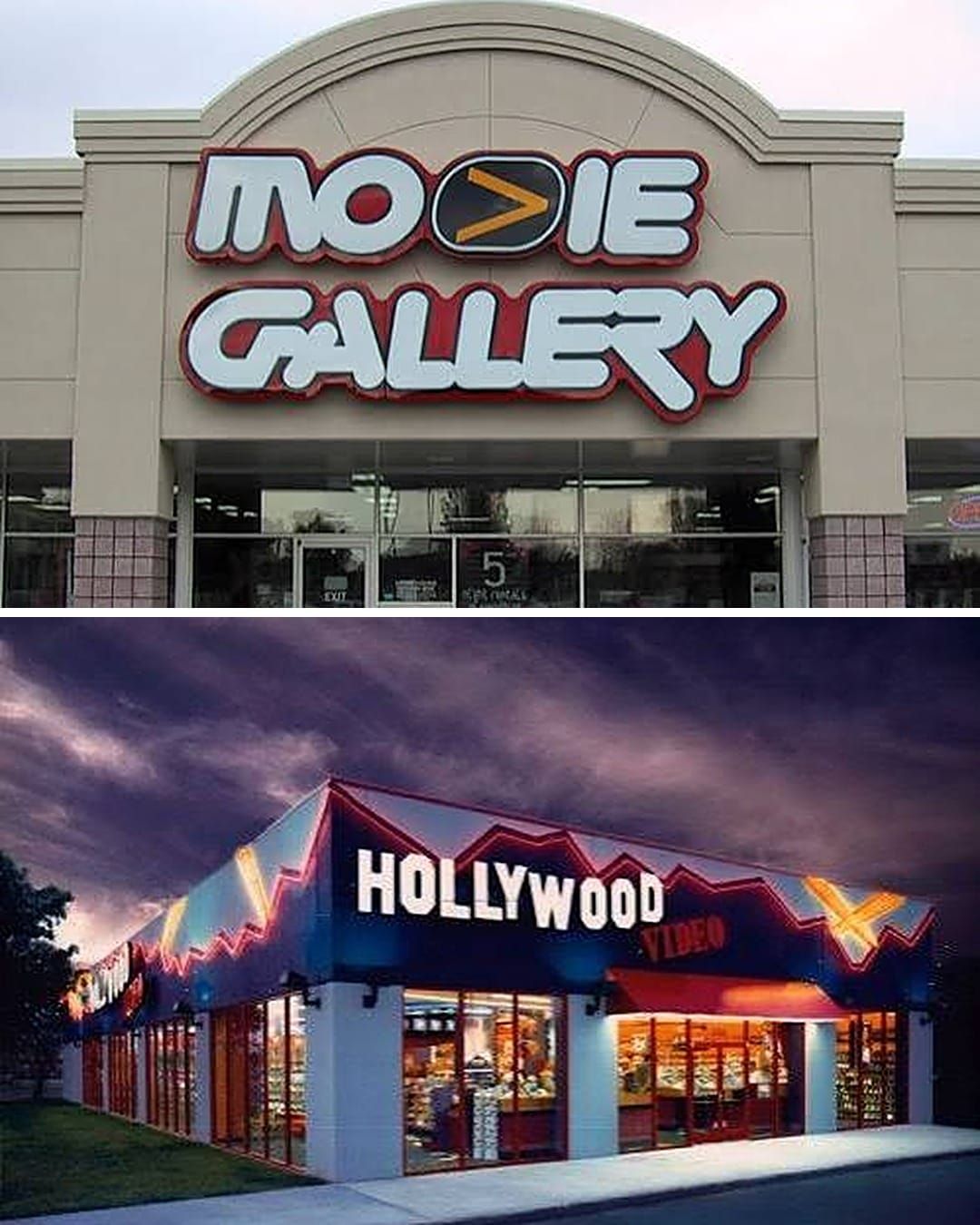
𝘛𝘩𝘦 𝘵𝘩𝘪𝘳𝘥 𝘴𝘵𝘰𝘳𝘦 𝘰𝘧 𝘈𝘮𝘦𝘳𝘪𝘤𝘢'𝘴 𝘕𝘰. 2 𝘷𝘪𝘥𝘦𝘰 𝘤𝘩𝘢𝘪𝘯 𝘸𝘢𝘴 𝘢 𝘧𝘢𝘪𝘭𝘦𝘥 𝘧𝘳𝘪𝘦𝘥 𝘤𝘩𝘪𝘤𝘬𝘦𝘯 𝘵𝘳𝘢𝘪𝘭𝘦𝘳 𝘪𝘯 𝘎𝘦𝘯𝘦𝘷𝘢, 𝘈𝘭𝘢𝘣𝘢𝘮𝘢.
If you grew up in a small Southern town, your video store was probably a Movie Gallery. Empty boxes on the wall, the tapes behind the counter, a bin of Sega and Nintendo games by the register, and a late fee waiting for you on Monday.
In 1985, Dothan tax attorney Joe Malugen told his partner Harrison Parrish they had just bought a video store. Neither of them owned a VCR. When an acquaintance's chicken stand in Destin folded, hauling the trailer home would have cost $3,000. Hauling it halfway cost $1,500. Malugen found the halfway town on a map, and the trailer became store #3 for the next ten years.
That was the whole playbook. Buy the mom-and-pop in a town too small for Blockbuster, keep the counter, and change the sign.
Hollywood Video ran the opposite play. Mark Wattles opened in Portland in 1988 and put his stores in the same urban centers as Blockbuster.
𝐓𝐢𝐦𝐞𝐥𝐢𝐧𝐞:
- 1985: Movie Gallery opens in Dothan.
- 1988: Wattles opens in Portland. The store is renamed Hollywood Video a year later.
- 1994: Movie Gallery IPO. 3 million shares at $14.
- 1999: 950+ Movie Gallery stores in 31 states.
- Early 2000s: Hollywood peaks at 2,000+ stores and 700 Game Crazy outlets.
- Dec. 2004: Blockbuster makes a hostile run at Hollywood.
- Jan. 2005: Hollywood agrees to sell to Movie Gallery instead. $13.25 a share, about $850 million plus $350 million of assumed debt.
- April 2005: Deal closes. 4,700 stores.
- Sept. 2007: 520 closures announced.
- Oct. 2007: Chapter 11. $1.4 billion in debt against $892 million in assets.
- May 2008: Emerges. Malugen is off the board by July. Headquarters leaves Dothan for Hollywood's old home in Wilsonville, Oregon.
- Feb. 2010: Second Chapter 11. 805 more closures. 2009 revenue down 28%.
- July 31, 2010: Last U.S. stores close. Canada follows Aug. 8.
Netflix and Redbox took the whole category, and no chain with a rental counter survived. But Movie Gallery walked into that storm carrying at least $1.1 billion in new debt. It borrowed that money to buy 2,000 stores across the parking lot from Blockbuster, the one fight its map had spent 20 years avoiding. Blockbuster (NRS #3) wanted Hollywood too, then dropped its bid citing antitrust concerns. It still filed Chapter 11 less than two months after the last Hollywood Video went dark.
𝘔𝘰𝘷𝘪𝘦 𝘎𝘢𝘭𝘭𝘦𝘳𝘺 𝘩𝘢𝘥 𝘵𝘩𝘦 𝘳𝘪𝘨𝘩𝘵 𝘮𝘢𝘱. 𝘛𝘩𝘦𝘯 𝘪𝘵 𝘱𝘢𝘪𝘥 $1.2 𝘣𝘪𝘭𝘭𝘪𝘰𝘯 𝘵𝘰 𝘭𝘦𝘢𝘷𝘦 𝘪𝘵.
A few weeks after the liquidation, Jim Brown bought signs and shelving from the liquidators and reopened stores under the Movie Gallery name in Bentonville, Pea Ridge and Siloam Springs, Arkansas. He had sold his own chain to Movie Gallery years earlier.
Was yours a Movie Gallery or a Hollywood Video, and what's in that building now?