Thom McAn - #41
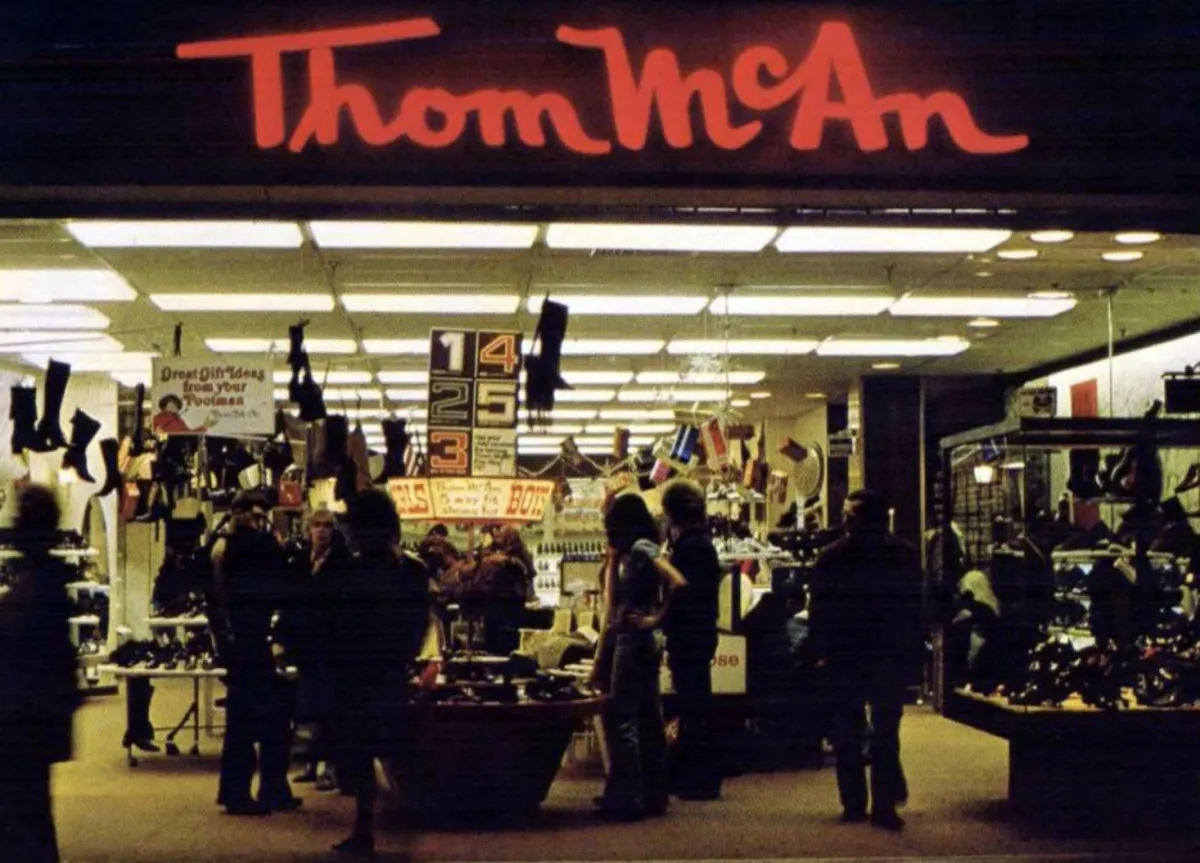
For anyone who grew up in the 60s, 70s, or 80s, the familiar red Thom McAn sign was as much a part of the American mall experience as the food court and the fountain.
Ward Melville and J. Franklin McElwain opened the first Thom McAn store in New York City in 1922, named after Scottish golfer Thomas McCann. The concept was simple: quality shoes at a fixed, affordable price of $3 a pair. Just five years in, the chain had exploded to 300 locations across the country. By 1939, over 650 stores were operating nationwide, making Thom McAn synonymous with affordable American footwear through the Depression and into World War II.
Between 1952-1960, parent company Melville Corporation went on an acquisition spree, purchasing the 151-store Miles Shoes chain and creating Meldisco to supply shoe departments in discount stores. The strategy worked brilliantly. Melville became America's largest shoe retailer, operating 1,400 stores. Thom McAn, alongside Kinney Shoes, dominated the market as malls proliferated and the interstate highway system connected suburban America.
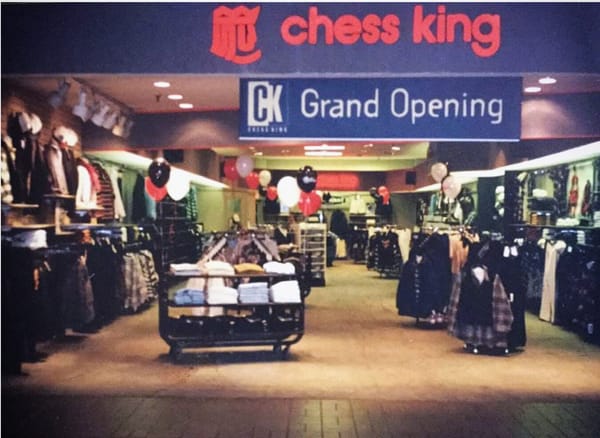
In the 1980s, Melville diversified into Chess King, Foxmoor, and CVS Pharmacy. But the first cracks appeared: six of seven footwear factories closed in 1983, followed by 72 store closures in 1985.
The Decline:
- Changing consumer tastes - Shoppers wanted trendy, not practical. They wanted Nike, Reebok, and designer brands, not dependable oxfords and Mary Janes.
- Import competition - Cheaper overseas manufacturing undercut Thom McAn's value proposition.
- Brand perception - Despite a late-90s marketing campaign (remember the duck saying "Change the shoes, Thom"?), the brand couldn't shake its reputation for being outdated.
By 1992, the retailer was down to 730 outlets. Melville announced it would close 350 stores. In 1996 the remaining Thom McAn stores closed their doors for good. About 100 locations converted to FootAction USA, while Melville spun off its footwear operations into a new company called Footstar to focus on its more profitable CVS division.
The Thom McAn brand didn't die...it just changed addresses. The shoes began appearing in Kmart stores through Meldisco-operated departments, later expanding to 1,500 Walmart locations in 2003.
"In 2005, Kmart owner Sears Holdings reached an agreement with Footstar – which by then was in bankruptcy and consisted almost entirely of the Meldisco-operated footwear departments inside Kmart stores – to let Footstar run the shoe departments through 2008, after which Sears would purchase the remaining inventory at book value. Sears Holdings acquired Footstar's intellectual property including the Thom McAn brand name." [Wikipedia]