Rite Aid - #42
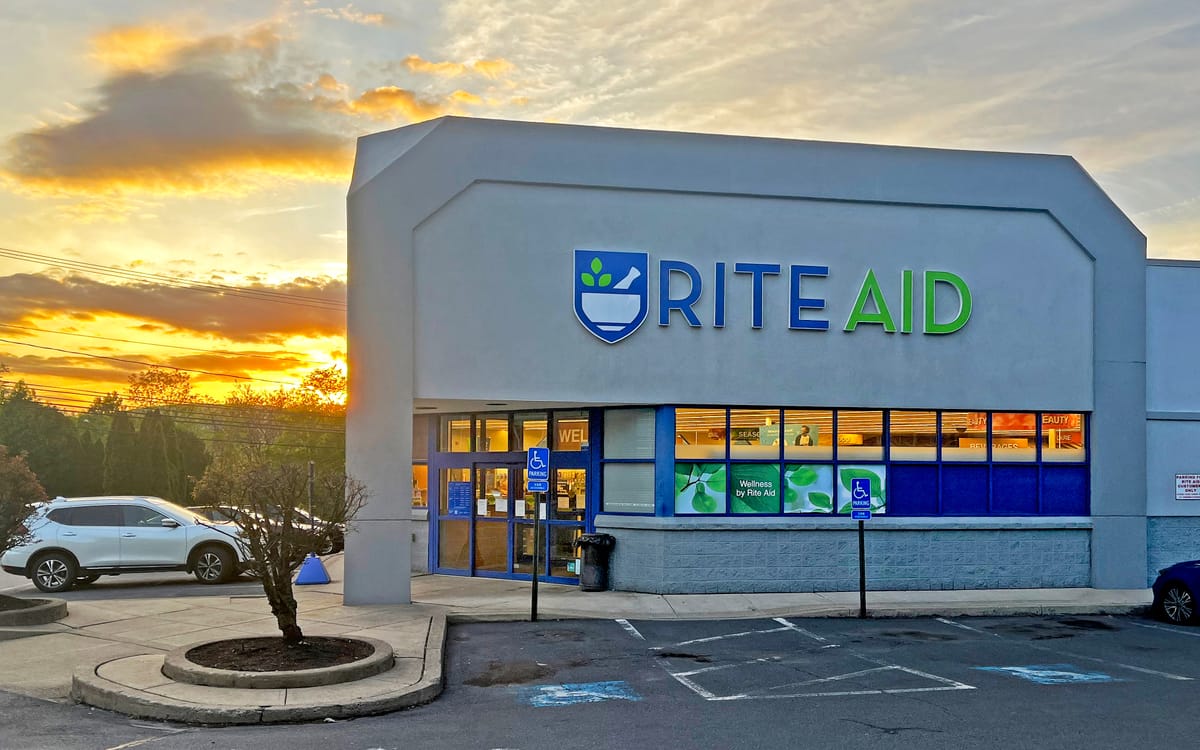
If you grew up in the Northeast or Mid‑Atlantic, Rite Aid was just… there. Flu shots, film developing, late‑night snacks, first jobs. But behind that familiar blue script was a brutal balance sheet story.
Founded by Alex Glass in 1962 in Scranton, PA as Thrift D Discount Center, the chain expanded to over 5,000 stores at its peak.
A Timeline:
- 1970: Lists on the NYSE and starts to scale beyond its home turf.
- 1970s–1990s: Aggressive roll‑up of regional drug chains, building a national footprint via M&A more than organic infill.
- 2007: Acquires Brooks and Eckerd, pushing past 5,000 stores and deepening exposure in the Northeast and Southeast.
- 2010s: Chronic debt and messy integrations collide with a tougher landscape. Attempts to sell large chunks of the chain to Walgreens and later merge with Albertsons stall or shrink under regulatory and shareholder pressure.
- Late 2010s–early 2020s: Opioid litigation, shifting shopper behavior, and years of under‑investment in operations and stores erode relevance.
- 2023: Files Chapter 11, accelerates closures, and exits markets like Michigan and Ohio.
- 2024: Brief emergence with a smaller footprint and big promises.
- 2025: Second bankruptcy and the decision to liquidate and close all remaining stores.
Lessons Learned:
- Debt‑fueled acquisition can buy share, not staying power, if margins and cash flow never catch up.
- Scale on paper is easy. True integration across banners, systems, and assortments is where many roll‑ups quietly (or not so quietly) break.
- Competing with vertically integrated competitors and big‑box players requires more than a “me too” pharmacy approach. You need a clear edge in access, experience, or economics.
- Store network strategy is vital to an expansion and entrenchment plan. Overlapping corners turn into self‑cannibalization on the way up, and pharmacy deserts on the way down.
Today, the only remnant of a once huge chain is the riteaid.com website that says: "All Rite Aid stores have now closed. We thank our loyal customers for their many years of support."