Nostalgic Retail Series #50 - NOODLE KIDOODLE
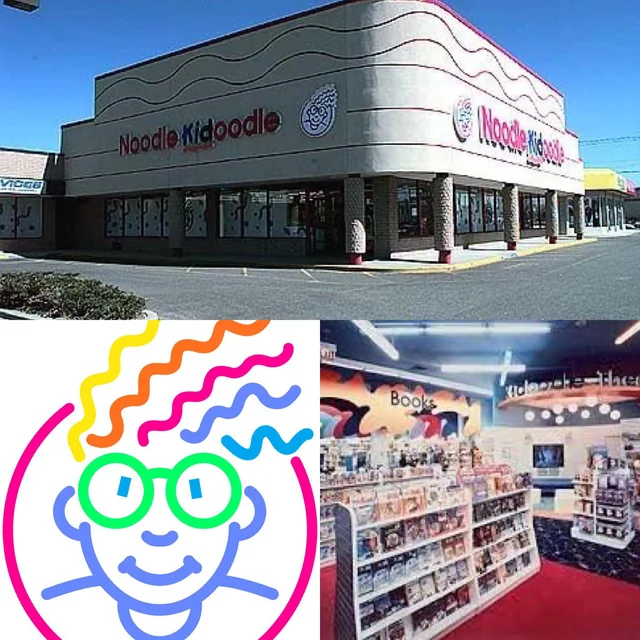
Fifty entries into this series, and this one might have the best name of them all.
If you were a 90s parent who refused to buy whatever was advertised during Saturday morning cartoons, Noodle Kidoodle was your store. Educational toys, demo stations, kids playing in the aisles. The slogan said it all: "Kids learn best when they're having fun!"
The Greenman family had been in toys since 1931, when Star Trading Company started wholesaling from Manhattan's Lower East Side. By the 80s, Greenman Bros. ran hundreds of mall toy stores under the Circus World banner. They sold those 330 stores to Kay-Bee in 1990 and went hunting for a niche the mass marketers ignored.
They found it: educational and creative toys, sold in a supermarket format.
Timeline:
- 1993: First Noodle Kidoodle opens in Greenvale, New York.
- December 1995: Greenman Bros. renames itself Noodle Kidoodle Inc. The 64-year-old company bets everything on the new concept.
- Late 1990s: Expands to roughly 60 stores across nine states, from New York to Texas.
- April 2000: Rival Zany Brainy announces it will acquire the chain. $35 million for 60 stores.
- July 2000: Deal closes. Stores convert to Zany Brainy. Combined chain: 171 locations in 34 states.
- May 2001: Zany Brainy files Chapter 11, ten months after the deal closed.
- 2001-2003: Assets pass to Right Start, which buys FAO Schwarz, renames itself FAO Inc., and files bankruptcy twice in 2003. Liquidation follows.
What Made Noodle Kidoodle Special:
- No mass-market, TV-driven toys. The merchandising was a filter, and parents trusted it.
- Hands-on everything. Demo stations, play areas, workshops. Kids tested the product before parents bought it.
- It was enjoyment retail 25 years before the industry started slapping "experiential" on everything.
The Lessons:
- This is the rare entry where the acquired killed the acquirer. Zany Brainy overspent on the deal by an estimated $20 million, on top of $20 million in dot-com losses, and was bankrupt within a year.
- M&A doesn't fix unit economics. Two specialty chains being squeezed by Walmart, Target, and Toys R Us don't become safer by merging. They become a bigger version of the same problem.
- The category won, the format lost. Educational toys are bigger than ever. The standalone educational toy superstore wasn't the durable asset; the trust-based curation was.
The postscript: Zany Brainy's founder and CEO walked away from the wreckage and opened Five Below in 2002. Sometimes the lesson survives even when the stores don't.