Joann (Fabrics & Crafts) - #40
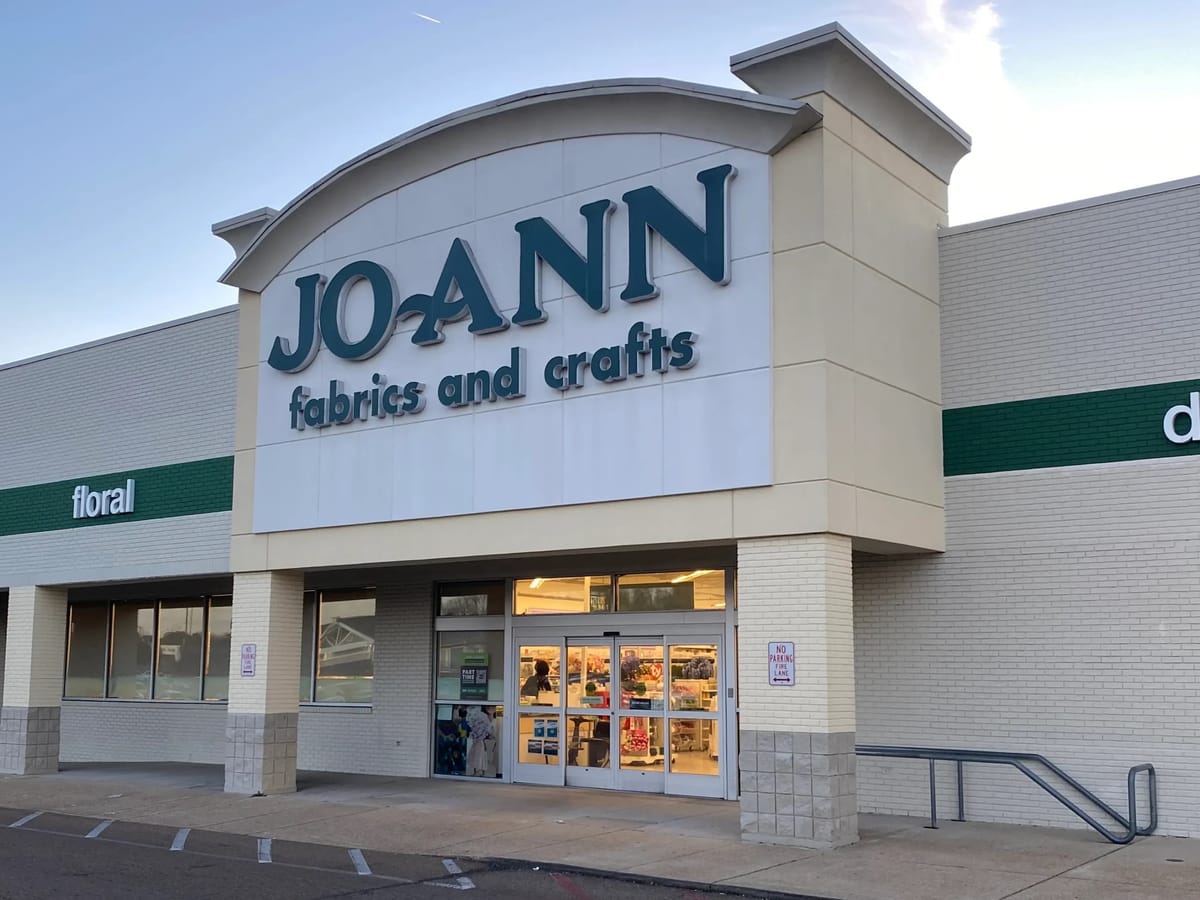
Founded in 1943 by German immigrants Hilda and Berthold Reich, Sigmund and Mathilda Rohrbach, and Justin and Alma Zimmerman, the business began as the Cleveland Fabric Shop in Ohio, later adopting the Jo-Ann Fabrics name as it expanded beyond a single location.
Becoming a publicly traded company in 1969, then Fabri-Centers of America, Inc., began rapid national expansion of its retail footprint.
1990s: Consolidation & Rebranding
1994 saw consolidation as Fabri-Centers buys Cloth World, expanding to more than 650 stores and strengthening scale in the fabrics market. 1998 brought on a rebranding initiative as the company changes its corporate name to Jo-Ann Stores, Inc. to align with its flagship brand
2010s: Consolidation & Rebranding
2010s brought an ownership shift: The company explores a sale to private equity and moves toward privatization, culminating in delisting from public markets. 5 years later, in 2015 there was a significant leadership change to respond to market conditions and challenges. This included Jill Soltau as President and CEO, along with other key executives.
2020s: Bankruptcy & Liquidation
Jo-Ann Fabrics filed for Chapter 11 bankruptcy protection in the District of Delaware as part of a restructuring plan on March 18, 2024. The bankruptcy plan aimed to reduce debt and reestablish the business as a privately held entity; Nasdaq trading was halted and the company was delisted from Nasdaq. The reorganization plan was approved in April of that year, but tough times remained.
January 15, 2025 brought a second Chapter 11 bankruptcy protection filing, citing declining sales as the primary reason. This led to the announcement of extensive store closures as part of right-sizing the footprint; 500 of the remaining 800 stores were part of the closure list. After failing to find a buyer, the remaining stores were liquidated; the last Jo-Ann stores closes in late May 2025.
"On June 5, 2025, a few days after the last store closed its doors, it was announced that arts and crafts retailer Michaels had acquired Joann's intellectual property and private labels, but none of its physical stores. Michaels itself has plans to expand its selection of products by introducing Joann's private labels to physical stores and online within the coming months. An increase in fabric searches on Michaels' website prompted the company to move forward with this decision." [Wikipedia]
Current status
Jo-Ann’s brand continues primarily as intellectual property and private-label assets owned by Michaels, with product availability channeled through Michaels’ platforms, as well as Joann-fabrics.com.