Caldor - #37
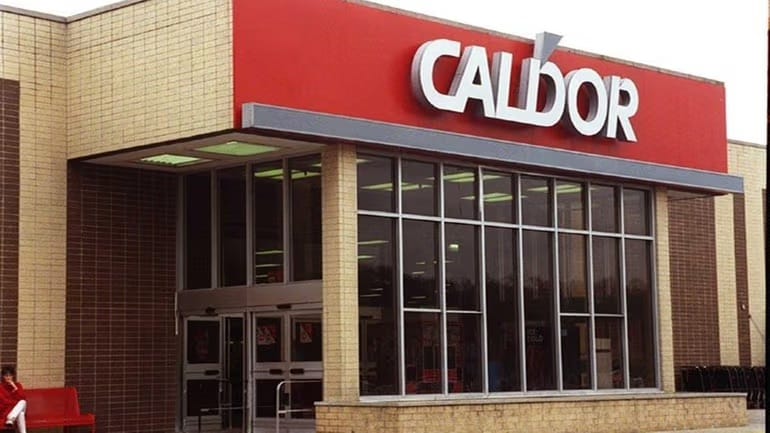
Founded in 1951 by husband and wife Carl and Dorothy Bennett, Caldor started as a modest second-story "Walk-Up-&-Save" operation in Port Chester, New York. The couple pooled their $8,000 in savings after visiting an E.J. Korvette store, inspired to create something different from typical postwar discount retailers. They combined their first names (Carl and Dorothy) to create "Caldor," a name that would become synonymous with quality discount shopping in the Northeast.
What set Caldor apart was its commitment to excellence. Referred to by many as "the Bloomingdale's of discounting," Caldor emphasized quality national brands at discount prices, never stocking closeouts or irregulars. The company's remained committed to its credo throughout their existence: "the best available merchandise at the lowest possible price."
By 1958, Caldor had expanded to a 70,000-square-foot store in Norwalk, Connecticut, adding clothing to its regular inventory of toys, housewares, and gifts. The stores featured wide aisles, bright lighting, and well-informed staff: design elements borrowed from upscale retailers rather than bare-bones discount operations.
Caldor went public in 1961 and expanded steadily through the 1960s and 1970s. By 1981, the chain operated 63 stores with revenues approaching $700 million annually. The company's strategic approach was disciplined: stores were located within a day's travel from headquarters and distribution centers, allowing for tight cost control and simplified operations.
The Acquisition Phase
In 1981, Associated Dry Goods (ADG), owner of Lord & Taylor and other quality department stores, purchased Caldor. Under ADG's financial backing, Caldor expanded at a rate of more than 20 new stores annually between 1981 and 1985, spreading across New York, Connecticut, Massachusetts, New Jersey, and New Hampshire.
In March 1984, Carl Bennett announced his retirement after 33 years with the company. At that time, Caldor had 100 stores and over $1 billion in sales. Bennett, who passed away in December 2021 at age 101, lived to see his modest venture become a regional retail giant.
In 1986, Associated Dry Goods was acquired by May Department Stores in what was then the most expensive retail merger in history at $2.2 billion. May immediately began cost-cutting measures that strained Caldor's operations. In 1989, May sold Caldor to an investment group including Odyssey Partners and Donaldson, Lufkin & Jenrette.
Despite becoming the fourth-largest department store chain in the nation by the mid-1990s, Caldor faced mounting pressure from national competitors. Walmart and Kmart were moving aggressively into the Northeast, challenging regional brands like Caldor.
The Final Chapter
In September 1995, Caldor filed for Chapter 11 bankruptcy protection. The company had $1.2 billion in assets against $883 million in liabilities. Despite closing underperforming stores and emerging from bankruptcy, the company couldn't overcome the competitive pressures from national chains offering deeper discounts and wider selections.
By May 1999, all 145 Caldor stores were closed and liquidated, ending nearly 48 years of operation. The iconic rainbow-striped storefronts that had been fixtures in shopping centers across the Northeast disappeared, replaced by competitors like Target, Walmart, Kohl's and other retailers who quickly moved into the vacant spaces.