Marshall Fields - #39
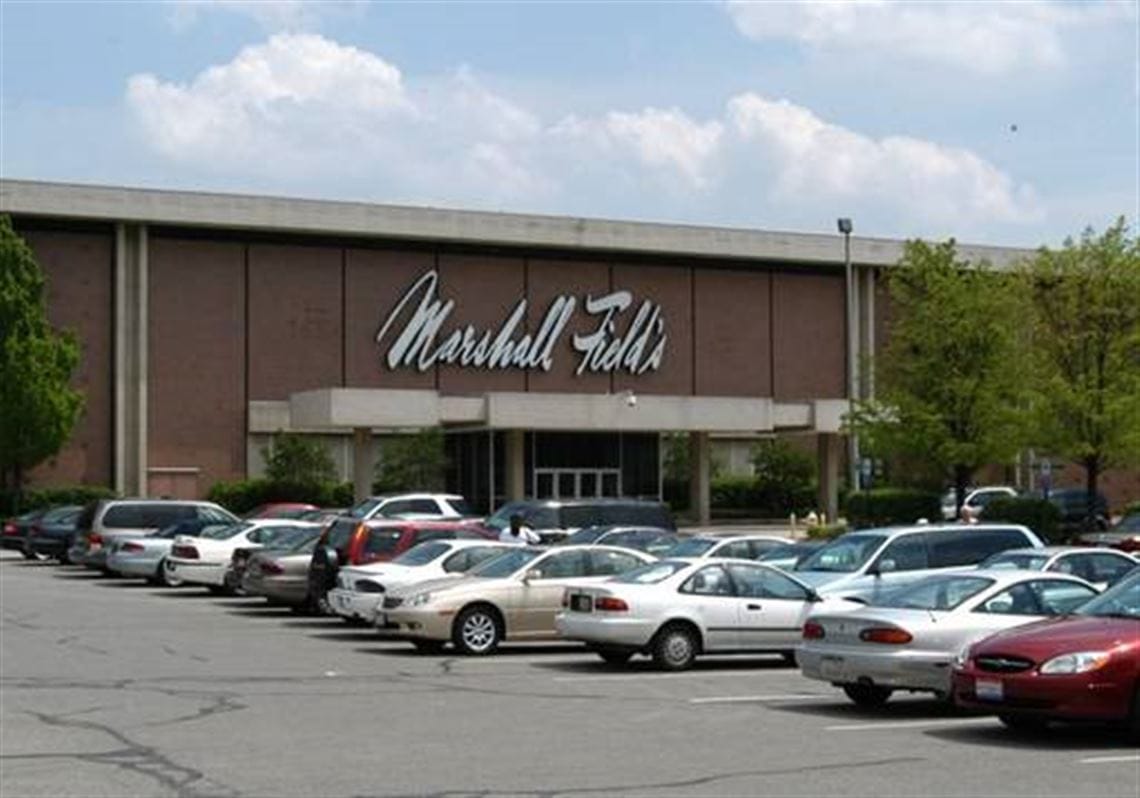
Marshall Field’s roots trace to 1852, when Potter Palmer opened P. Palmer & Company in Chicago as an upscale dry-goods store focused on service and trust. In 1865, Marshall Field and Levi Leiter joined the business, and by 1881 Field had taken control and rebranded it as Marshall Field & Company.
By the early 20th century, the State Street flagship had expanded into a grand, full-block building that would become a National Register landmark, complete with the famous corner clock and ornate interiors. Experiences like the Walnut Room, elaborate window displays, and holiday traditions turned a shopping trip into a ritual for generations of Chicagoans and visitors.
1920s–1960s: Growth, Mart, And Suburbs
In 1930, Marshall Field & Co. completed the massive Merchandise Mart, signaling its scale as both a retailer and wholesale powerhouse. Mid-century, the company led suburban expansion with locations in new shopping centers like Old Orchard in Skokie, aligning the brand with the rise of car-centric, regional retail.
1970s–1990s: New Markets And New Owners
From the late 1970s through the 1980s, Marshall Field’s added out-of-region stores and navigated takeover attempts, ultimately selling to BATUS Inc. in 1982. In 1990, Dayton Hudson Corporation (later Target Corporation) acquired the chain, investing in the State Street flagship and further integrating Field’s into a larger department store portfolio.https://www.youtube.com/watch?v=dAjuOQ7X7zA
2000s: Conversion to Macy's
In 2004, Target sold Marshall Field’s to May Department Stores; the following year, Federated (now Macy’s, Inc.) acquired May, setting up the nameplate conversion. On September 9, 2006, all Marshall Field’s stores were rebranded as Macy’s, a move that sparked local protests and underscored just how deeply the Marshall Field’s name, traditions, and experiences were woven into Chicago’s civic memory.
Even without its original banner, Marshall Field’s remains the standard for department stores, where architecture, service, and storytelling created emotional loyalty that outlasted the brand itself. Marshall Field's firsts included the department store tea room, the first European buying office, the personal shopper, revolving credit and the first department store to use escalators.