unCERTAINty
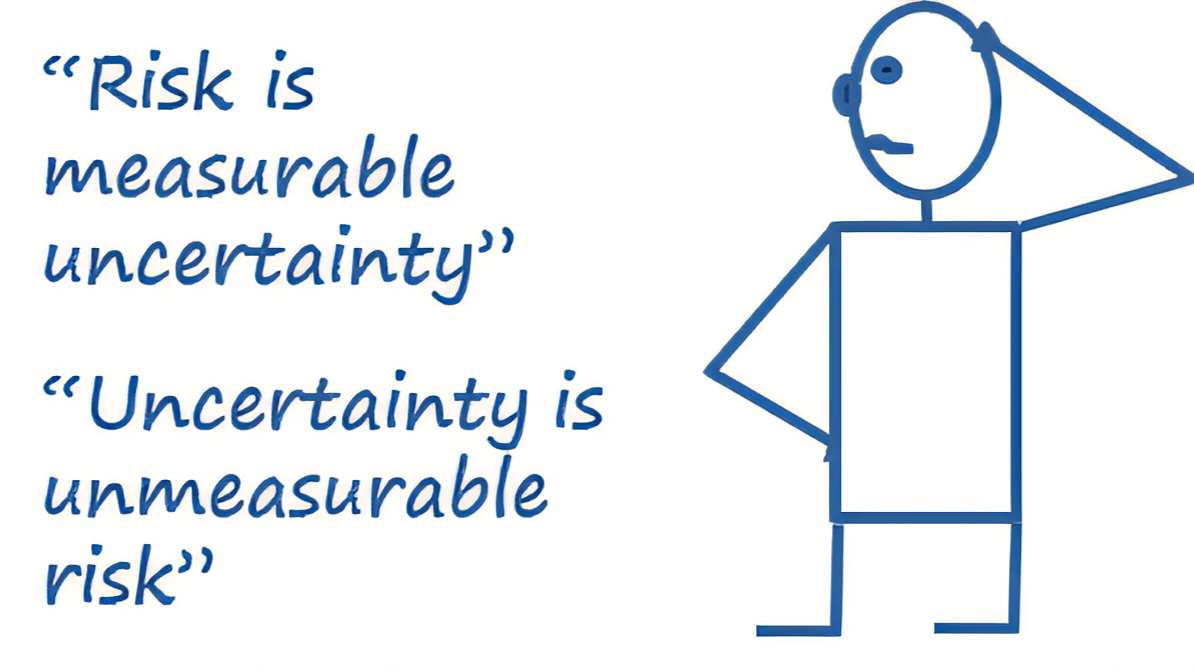
Let me start out right up front with this: I am not making any political statements...pro or con. I am simply discussing what is at hand for retail and commercial real estate.
I also want to acknowledge that the idea for the title font was inspired by the awesome book by Kevin Ervin Kelley, AIA titled, "irrePLACEable."
So...now...let's dive in!
To Tariff or Not to Tariff, that is the Question

This seems to be causing the most economic unCERTAINty and has frozen companies and consumers in their tracks. The impact of on-again, off-again tariffs:
- Disrupting Trade Flows: especially when imposed unexpectedly, can disrupt established supply chains and trade patterns. This can lead to higher costs for businesses that rely on imports, potentially causing them to reduce production or investment.
- Impact on Business Investment: unCERTAINty about future trade policies can deter businesses from making long-term investments, as they may fear that tariffs could change their competitive landscape or profitability. This can slow down economic growth and reduce job creation.
- Consumer Spending:If they anticipate price increases due to tariffs, they may delay purchases or reduce spending on discretionary items. unCERTAINty stops the consumer from spending!
- Market Volatility: The constant unCERTAINty leads to increased volatility in financial markets, as investors struggle to assess the potential impact of tariffs on global trade and economic growth.
- Prices of Goods: As tariffs get passed on to consumers, it creates everything from binge buying (stockpiling) to inflationary pressures. One thing is for certain, prices rarely, if ever, go down once they have gone up.
- Trade Wars: retaliatory measures and further tariff increases create a cycle of instability.
- Recession: maybe or maybe not, but the unCERTAINty makes you stop and think, causing postponement of decisions (investment, expansion, and otherwise).
Jobs, AI and Technological Efficiencies

As companies move to operational efficiencies to improve performance and combat the unCERTAINty, a few things stick out to me:
Many retailers and restaurants have started to come to grips with the fact that most Americans will not work in these industries, even in extreme situations. Turnover is high, desire is low, and these sectors are no longer seen as teenage or first job rites of passage. They are definitely not seen as lucrative careers ( Walmart store managers may be the exception! 🤯)
Enter #AI and #Robotics - a.k.a. #Technology.
The tech is not only decreasing the labor need, but also shifting much of the transactional responsibility to the consumer. And it's not just self-checkout. When was the last time you found an employee ready to answer your questions with the appropriate product knowledge at a Home Depot, Best Buy, TJX, or even at your local garden shop or grocery store?
Many companies are using the word "experiential" to reflect this change and guise the consumer into thinking they are offering something unique, trendy or enticing, when in reality (and in most cases) it is nothing more than cost cutting efficiencies wrapped in a nice package.
And even though many consumers complain about lack of customer service or poor restaurant experiences, it is somehow accepted as the way it is or the "wave of the future." And I assure you that the tech train has left the station and will be full speed ahead in 2025 and beyond, even as unCERTAINty looms.
An unCERTAIN 2025 for #CRE

- High interest rates have disrupted financing and deal-making, making it more difficult for investors and developers to access capital and complete deals. That being said, it appears as if a "new normal" attitude may be pushing through the unCERTAINty trying to get creative and make deals pencil. There is plenty of available money...but the pencil only has so much eraser in trying to get creative.
- As unCERTAINty escalates, risk premiums rise, contributing to decreased asset valuations in CRE, yet high-quality properties may present investment opportunities.
- Monetary policy effectiveness could diminish during prolonged periods of economic unCERTAINty, requiring significant shifts in inflation or unemployment to prompt action.
- Even if tariffs are renegotiated favorably, ongoing unCERTAINty may persist, leading to continued market caution and potential reassessments of business strategies.
- Shorter -term or more flexible deals may be necessary to combat the unCERTAINty. Again, creativity to help deal with a cautious, indecisive market.
My pencil broke!! (ok...enough with the pencil analogies)
- When trying to combat crazy insurance increases, high interest rates, high construction costs and a market that changes by the minute, how are properties supposed to trade and how do deals get done?
Remember the words of Eleanor Roosevelt:
‘If life were predictable it would cease to be life, and be without flavor’.
IN THE NEWS
Retailers have big questions about AI
"Artificial intelligence can help you with more than just support—here’s how."
The enduring appeal of pens and paper in a digital era
"Analog forms of communication are far from dead. U.S. indie brands are capitalizing on a dedicated customer base that has had to look abroad for special stationery goods."
Here's why Buy for Me is the key to Amazon's retail growth, and not building more physical stores
"Amazon can grow and become even more dominant by forming relationships with other retailers."
The evolving landscape of private credit in U.S. commercial real estate lending
"As commercial real estate is still finding its footing following the pandemic, the lending landscape continues to shift. Traditional lenders are maintaining a conservative approach, as they balance tight regulations, ongoing liquidity challenges, and sector uncertainty alongside borrowers."
Commercial real estate outlook brightens as NYC offices fill up
"Investors regain confidence in New York's commercial real estate as office demand surges, fueling major deals."
On Again, Off Again: Tariffs & Commercial Real Estate
CBRE reports on why tariffs matter for CRE and what industries are impacted.
Nostalgic Retail Spotlight:
FILENE'S

Originally names William File & Sons Company, the retailer was founded in 1881 by its namesake. Filene's Basement, its off price sister, was founded shortly after in 1908 as a means to dispose of the inventory that was not moving in the department store (upstairs).
Together with Abraham Straus and Lazarus, Filene's joined in the founding of Federated Department Stores in 1929. Fast forward to 1988 and Campeau Corp made a leveraged buyout of Federated and the Filene's brand was sold to May Department Stores.
Filene's grew steadily and aggressively in the 1990s with 2005 seeing Federated acquire May to bring it back into the fold.
"The likelihood that the May nameplates would be replaced by the Federated-owned Macy's was acknowledged, citing the "considerable success in re-branding [Federated's] regional stores as Macy's" and that "operating regional stores primarily under one brand means [they] can advertise nationally, unlike regional retailers, which is more cost-effective;" the changes were unlikely to occur before 2006. Indeed, the company-wide conversion to Macy's was confirmed in July, and the merger was completed in August." [Wikipedia]
Federated divested Filene's locations where they had centers with both Macy's and Filene's with the last remaining Filene's store closing in September of 2006.
With the closing of Filene's, the Boston Landmarks Commission made the 1912 main location in Boston a historic landmark.
Filene's Basement was not impacted by the Filene's - Macy's consolidation as it was owned by Retail Ventures until 2009 when it sold to Buxbaum Group. In 2011 Filene's Basement filed for its third Chapter 11 bankruptcy protection with a;; stores closing in December of 2011.Macy's still pays tribute to Filene's on its site (although very subtly and hidden) on the following webpage.