The Retail "Third Place": From Starbucks to Everywhere
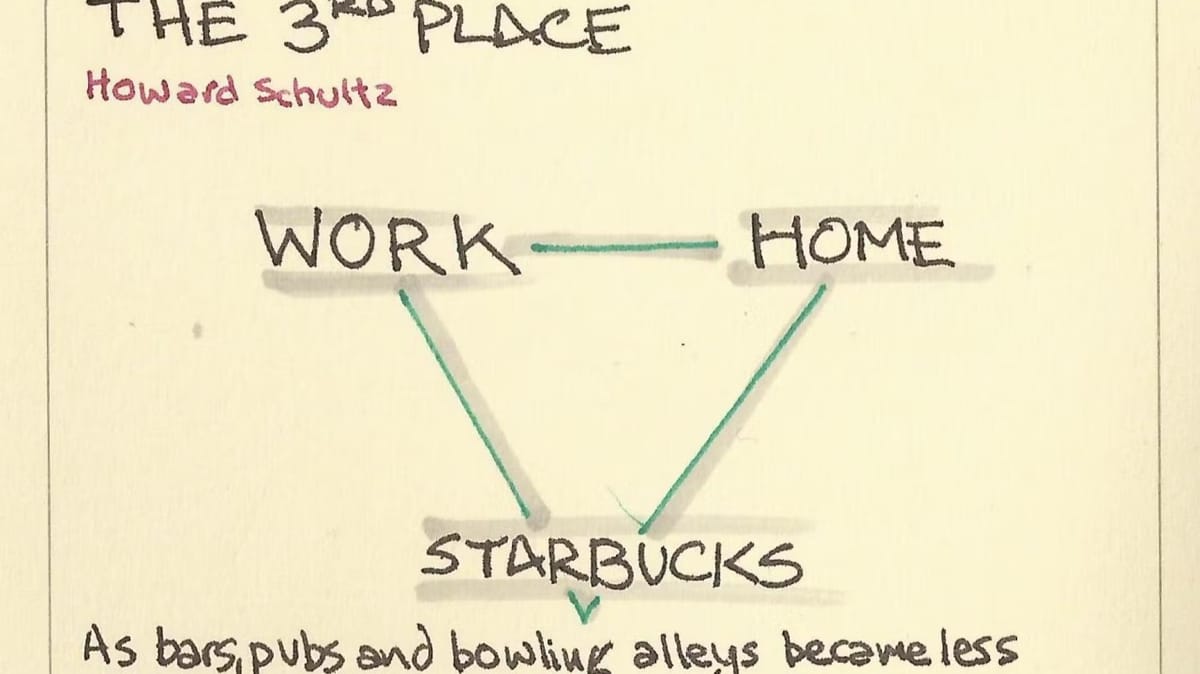
What Is a Third Place?
The concept of the "third place" was coined by sociologist Ray Oldenburg in his 1989 book The Great Good Place to describe social environments that are distinct from home (the "first place") and work (the "second place")—settings where people gather informally, connect, and build community. Classic examples include cafes, bars, libraries, parks, and salons. These venues are open, comfortable, and foster a sense of belonging, conversation, and community engagement.
Starbucks and the Third Place Revolution
While Oldenburg invented the term, Starbucks popularized and commercialized the third place concept in retail. The company built its brand identity on being a "third place"—a welcoming, comfortable spot between home and work, where people could linger, socialize, or work remotely. Starbucks’ plush seating, ambient music, and free WiFi were all designed to create the "Starbucks experience," making it a destination for connection, not just coffee.
“It never really was about the coffee to me with Starbucks... When I think about Starbucks, I think about Comfy Chairs, Great Smells, Pretty People and WiFi.” — Matt Dollinger, Fast Company
The "Overuse" of the Third Place
Over the past decade, the relevance of the traditional third place has waned as all of retail seems to try and find their version of this coined term. Several forces have contributed:
- Economic and Social Changes: Rising rents, labor costs, and the corporatization of retail have made it harder for independent third places to survive. Even Starbucks has closed hundreds of centrally located stores and reduced seating, transforming some locations into quick-service hubs with little room for lingering.
- Behavioral Shifts: Lives have become more scheduled and structured. Instead of spontaneous visits to a coffee shop, people now make appointments, reducing the organic, drop-in nature of third places.
- Technological Disruption: The rise of mobile ordering, drive-thrus, and digital platforms has made convenience and speed the new priorities. Starbucks itself has pivoted toward efficiency, investing heavily in mobile and drive-thru experiences, and redefining the third place as a "feeling" that can be delivered digitally or on the go—not just in-store.
- The Digital Third Place: Online communities, social media, and virtual spaces have emerged as new forms of third places, offering connection without physical proximity. This evolution has further eroded the need for physical gathering spots.
From Third Place to "Every Place"
Today’s consumer expects brands to be "everywhere"—present across all channels, both physical and digital, and ready to meet their needs wherever and whenever they arise. The line between retail, home, and work has blurred. Shopping, socializing, and working can all happen simultaneously, whether in a coffee shop, at home, or online.
- A Harmonized Retail Experience: Consumers demand seamless integration between in-person and digital experiences. Retailers are expected to deliver the same level of service, connection, and convenience across every touchpoint—store, app, website, or social platform.
- Hyper-Experiential Retail: The next frontier is not just being a destination, but creating immersive, memorable experiences wherever the consumer is—at an airport, a pop-up event, or through a mobile app.
Retail Everywhere: The "third place" is no longer a single, physical location. It’s a fluid, omnipresent brand experience that adapts to the consumer’s lifestyle and preferences, making every place a potential third place.
The retail third place—once embodied by Starbucks and its cozy cafes—has evolved. While the nostalgia for communal gathering spots remains, the reality is that today’s consumers want brands to be everywhere they are, offering connection, convenience, and experience across all channels.
The future of retail is not just about creating a third place, but about becoming an "every place"—meeting customers wherever they want to be, however they choose to connect.
IN THE NEWS
Why America is turning into a nation of homebodies
"Experts used data from the American Time Use Survey to study how people in the U.S. spent their time before, during and after the pandemic. Here’s what they found."
Rest of Year Isn’t Looking Good for Retail-Property Market (WSJ - Paywall)
"Rebound is fizzling amid store-chain bankruptcies and tariff concerns"
The Rich Are Still Spending—Just Not on Your Logo
"The top 10 percent of earners account for half of consumer spending. Here’s what they’re actually buying."
Why Target is losing out against competitors Walmart and Costco
"Retailer Target is under pressure on multiple fronts: it's facing pushback after rolling back its diversity, equity and inclusion initiatives; it’s fighting off stiffer competition from nimble competitors like Amazon; and the company has higher exposure to a decline in consumer spending amid inflation and tariff volatility than rivals like Walmart and Costco."
The Golden Age of the Fried-Chicken Sandwich
"The sun is setting on burger dominance."
Nostalgic Retail Spotlight:
PAYLESS

Founded in 1956 by cousins Louis and Shaol Pozez in Topeka, Kansas, Payless started as a small family-run business. Through offering trendy shoes at budget-friendly prices, it quickly built a reputation for making fashion accessible, especially for families on tight budgets.
The 1960s marked the beginning of Payless’s rapid expansion. The company acquired smaller brands like Picway Shoes and Parade of Shoes, broadening its footprint across the U.S. By the 1980s, Payless had become a household name, with stores popping up in malls and shopping centers nationwide. Its mission remained clear: deliver fashionable footwear at unbeatable prices to the masses.
In 1996, Payless took a major step by going public, opening doors to further growth and diversification. The 2000s saw the company undergo significant ownership changes, culminating in a major merger in 2007 with Collective Brands Inc., which helped boost its profile but also exposed it to new financial pressures.
As the 2010s rolled in, the retail landscape changed drastically. E-commerce and online shopping began to shift consumer habits, and competition from both online giants and other discount retailers intensified. These challenges hit Payless hard, leading to financial struggles. The company filed for Chapter 11 bankruptcy twice, in 2017 and again in 2019, which resulted in the closure of all 2,100 stores in the United States (international stores were not impacted).
"Payless emerged from bankruptcy on January 16, 2020, with plans to re-launch a U.S. e-commerce site. On August 18, 2020, Payless, officially dropping 'ShoeSource' from its name, did relaunch its e-commerce website. It also announced plans to open between 300 and 500 free-standing stores in North America over the next five years and relocated its company headquarters from Topeka, Kansas to Edgewater, Florida."
As of today, this is the message greeting U.S. customers on payless.com: "We appreciate your patience with us as we're busy behind-the-scenes working on a shopping experience that will knock your socks off." In addition, in small print, "Effective August 11, 2023, retail sales in North America on payless.com are no longer available. Please note that all orders made on or after June 6, 2023, are final and non-returnable. We thank you for your patience as we continue to work diligently on the future of Payless.com." [Wikipedia]
As of today, Payless is non-existent in the U.S. retail marketplace.