Off-Price is on 🔥
The Resilience of Off-Price Retail: Thriving Amid Economic Uncertainty
As we navigate through a period marked by economic uncertainty, one retail segment has consistently demonstrated its ability to weather the storm: off-price retail.
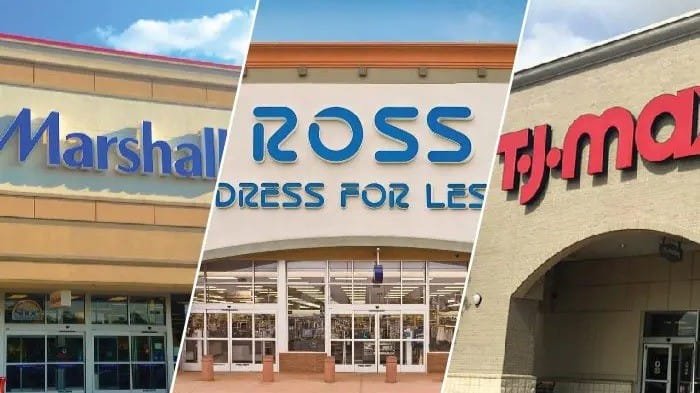
Despite challenges faced by traditional retailers, off-price giants like The TJX Companies, Inc. , Ross Stores, Inc. , and Burlington Stores, Inc. have not only maintained their market share but have also expanded their reach, especially with higher-income shoppers who are trading down for value while still buying brand-names.
Key Drivers:
- Value-Oriented Shopping: Consumers are increasingly prioritizing value over brand loyalty, seeking quality products at discounted prices. Off-price retailers have capitalized on this trend by offering branded goods at significantly lower prices than traditional retailers
- Recession-Proof Strategy: Off-price retailers have proven to be recession-proof (even thriving during uncertainty) by providing a mix of quality and affordability, with the combined "Treasure Hunt" effect in the shopping experience
- Diversified Product Offerings: These retailers offer a wide range of products, from apparel and footwear to home goods and accessories. In many respects, its the new department store. Diversification of inventory helps them appeal to a broad customer base. In addition, how these retailers acquire goods provides an additional strategic advantage
- Strategic Store Locations: Many off-price retailers are located in standalone locations or strip malls, which often provide easier access and parking compared to traditional department stores and malls. This strategic positioning allows for more frequent visitation, (customer convenience), lower operating costs and acceptable lower-tier merchandising/display also helping to keep costs low

Outlook:
The off-price retail market is projected to experience significant growth, with a forecasted CAGR of 7.6% to 8.7% over the next few years.
Companies like TJX are aggressively expanding their store count, as is Ross, Burlington and others.
In addition, many of these retailers are looking towards e-commerce expansion to reach a broader audience, continuing to shift to purchasing excess inventory from struggling retailers vs. directly from brands, expand into emerging markets and integrate more technology to improve experience and optimize efficiencies (costs).
Follow me for more insights on retail, real estate and consumer trends and strategies.
IN THE NEWS
Amazon Fresh needs to find its identity
"Dash Cart or Walk Out was never a good reason to start a grocery chain"
Multifamily Poised for Best Buying Opportunity in Years
"Strengthening fundamentals and pent-up investor demand are driving higher sales volume."
State of the industry: How much does technology really improve restaurant operations?
"Only 28% of operators say that investments in technology improved the profitability of their restaurant"
US Warehouse Real Estate - The Boom and Fizzle
"we explore the rising warehouse vacancy rates across the United States and revisit the pandemic-driven warehousing boom that had a significant impact on the logistics industry."
Finding Value in a Value-Already-Added World
"The value has been added at value-add retail properties in major markets, and now many investors and developers are turning to smaller cities and Class B and C properties."
NOSTALGIC RESTAURANT SPOTLIGHT:
Farrell's Ice Cream Parlour

Founded in Portland, Oregon in 1963 by Bob Farrell and Ken McCarthy, this chain of ice cream parlors and sandwiches was know for it early 1900's theme (including employee uniforms) and the famous player piano at each location.
Purchased by Marriott Corporation in 1975, Farrell's grew to 120 locations by 1975.
The usual story of increased competition and quality of product vs nostalgia of offering transpired and sales continued to fall. Marriott sold the chain to private investors in 1982 and almost all locations were closed by the turn over to the decade of the 1990's.
"The remaining Farrell's locations continued to operate independently after the original chain had closed. As of 2000, there were 6 locations in Oregon and southern California operating under the Farrell's name." [Wikipedia]
After a long legal battle over the brand's rights, Parlour Enterprises was awarded brand ownership and started to franchise the concept with the founder, Bob Farrell, as an advisor. By 2014 the brand was at 8 locations,
With significant debt, the chain started to close locations in 2016. "In August 2016, Farrell's was featured on CNBC's series The Profit, where Marcus Lemonis made a deal with the current owners and stakeholders of the Farrell's brand; three locations stayed open with a last push to bring back the iconic restaurant and ice cream parlour." [Wikipedia]
The last attempt to save Farrell's didn't work and the final location closed in June 2019.