Nostalgia to End 2025...
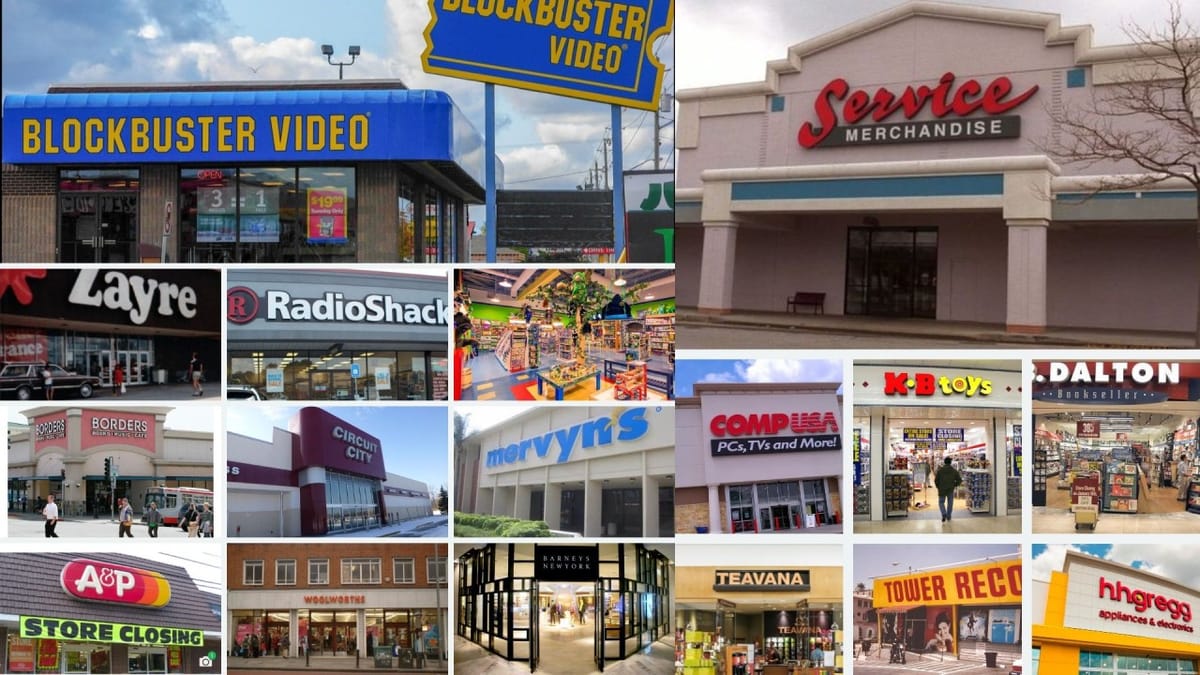
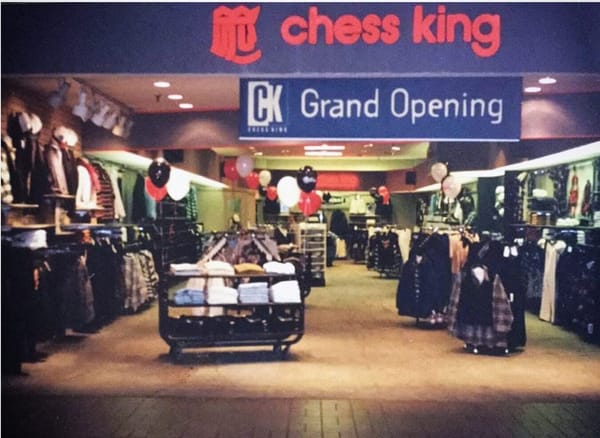
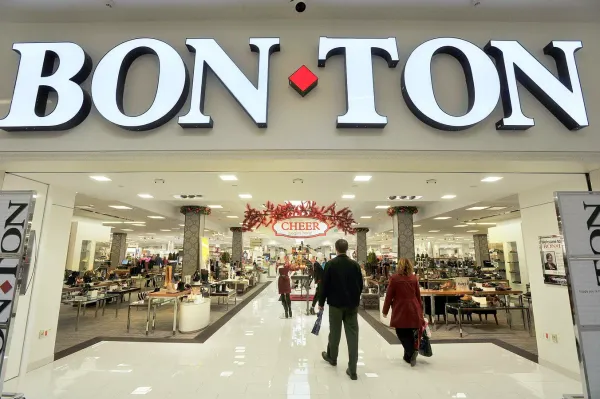
One of the unexpectedly viral series of posts this year for me has been the Nostalgic Retail and Nostalgic Restaurant Series. These have been fun to do, have brought back successful strategies, questionable decisions, failed leadership, and most of all....brand attachment that we all had to many of these brands.
As we close out 2025, I want to feature some of these concepts, as a look back to the best of retail past.
Want to see the rest of the Nostalgic Retail Series? Click HERE. And, the Nostalgic Restaurants are available HERE!
I hope everyone has a very Happy Holiday Season and a Happy and Healthy New Year!
Woolworths

Going old school here. Founded in 1879, Woolworth’s sold general merchandise and was called “five and dime” because everything sold for 10 cents or less (the precursor to dollar stores and Five Below). By 1929, there were 2,250 stores.
“Despite its growing to be one of the largest retail chains in the world through most of the 20th century, increased competition led to its decline beginning in the 1980s, even while its sporting goods division grew.” [Wikipedia]
The chain went out of business in July 1997, when the company decided to shift its primary focus to sporting goods (Footlocker believe it or not - so named in 2001).
Woolworth’s name survived internationally, even though it had nothing to do with the U.S. company. Woolworths was an innovator and trendsetter that created many retail practices still in use today including merchandising strategies, direct purchasing, sales and customer service practices!
CompUSA

CompUSA was the epitome of a big box retail electronics chain. Founded in 1986 as Soft Warehouse by Errol Jacobson and Mike Henochowicz, its first megastore opened in Atlanta, Georgia in 1988.
Changing its name to CompUSA in 1991, it operated almost 230 locations with over $2B in revenues at its peak and was listed on the NYSE.
Competitive pressures, mis-management and a failure to adapt to the online world (amongst other things) led to the deterioration of the brand.
"On December 7, 2007, an affiliate of the restructuring and disposition firm Gordon Brothers Group, Specialty Equity, bought the company. Systemax purchased the CompUSA name, 16 retail locations and other company assets in January 2008." [WSJ]
In 2012, Systemax changed the name of CompUSA (and Circuit City) to TigerDirect and all intellectual properties were sold.
The brand was relaunched online as an affiliate website in 2018 but shut down soon after.
Today there is a compusabusiness.com website that states: "The All-New CompUSA.com has more Computers, Laptops, Televisions, Software, Electronics than ever before!" but doesn't appear to really be in operation and does not have the original domain.
Montgomery Ward

Montgomery Ward was started by Aaron Montgomery in 1872 as a mail-order business selling to farmers in rural areas near Chicago.
Along came competition ni 1886 with the introduction of the first Sears' general catalog.
The first retail stores opened in 1926 as the company expanded beyond mail-order only, growing to more than 500 stores by 1929. A year later, in 1930, Montgomery Ward turned down a merger offer from Sears. After many ups and downs, the company merged with Container Corporation of America in 1968 under the new parent name of MARCOR.
In 1985, the company ended its catalog business. Facing competition from new discount retailers in the 1990s, the store filed for bankruptcy in 1997.
"On December 28, 2000, after lower-than-expected sales during the Christmas season, the company announced it would cease operating, close its remaining 250 retail outlets, and lay off its 37,000 employees." [Wikipedia] The last store closed in 2001.
In 2004, the Montgomery Ward intellectual property was purchased by DMSI (Direct Marketing Services, Inc.) and DMSI launched a new online and catalog-based retail presence. In 2008, with DMSI struggling, Swiss Colony (eventually Colony Brands) purchased DMSI and re-launched the website in late 2008 with new catalogs surfacing in early 2009.
As with many of the brands in this series, Montgomery Ward continues to exist online at wards.com. They pay tribute to their past with a section of the website dedicated to their "150th Anniversary" which took place in 2022.
A&P

The Great Atlantic & Pacific Tea Company, better known as A&P, started as a mail order business around 1859.
By 1920, there were 4,500 stores; by 1930, 15,000. In 1936, in Braddock, Pa., A&P opened a “supermarket.” By the 1950s, A&P was, briefly, what Walmart is now, the nation’s largest retailer, with a 75 percent share of America’s grocery business (sounds like a grocery monopoly to me!!). The chain filed for bankruptcy in 2010 and 2015, with the last store closing in 2016.
A&P became stale and never adjusted to consumer’s moving to the suburbs and their changing shopping habits. Remember, when you are #1, there is nowhere to go but down!
Its legacy: The chain created Woman’s Day magazine in the '30s to showcase recipes and ingredients available in-store. (source: Good Housekeeping)
R.I.P A&P (lots of letters…right?)
Sam Goody

Founded in 1951 by Sam Gutowitz, Sam Goody built its reputation on discounted vinyl records and became a major music retailer in the 1980s and 1990s. It operated more than 800 locations at its peak and was especially known for its “Goody Got It” slogan and broad selection of music, movies, and games. The chain became a staple in shopping malls across the U.S. and the U.K., offering a communal experience for music fans long before digital platforms dominated. (npr)
The company’s decline traces back to multiple ownership changes and the rise of digital music. It was acquired by Best Buy in 2001, sold to Sun Capital Partners in 2003, and then faced bankruptcy in early 2006 under its parent company, Musicland Group. The bankruptcy resulted in the closure of more than 200 Sam Goody stores, and the remainder were purchased by Trans World Entertainment later that year. Most of those stores were subsequently rebranded as FYE (For Your Entertainment), leaving only a few Sam Goody-branded locations operating after 2012. (nj)
In late 2015, Trans World had a single Sam Goody open in a newly renovated center in Tallahassee, Florida, but this closed in April of that same year.
In February 2020, Trans World sold Sam Goody's parent FYE to Sunrise Records for approximately $11 million.
The final two locations, Ohio Valley Mall and Rogue Valley Mall, became nostalgic destinations for former customers. The Ohio location, managed by longtime employee Rick Polanski, generated over $2 million in annual sales at its height but ultimately succumbed to the same challenges that brought down the chain: streaming dominance, declining mall traffic, and shifting retail economics.
The February 2025 closure officially ended the Sam Goody legacy, which had stood as a defining symbol of the in-store music experience for more than seven decades.
And Here is a Restaurant One To Close It Out...
Steak & Ale

Founded in 1966 in Dallas, Texas by the one and only Norman Brinker, a legend in the restaurant industry.
"The chain, with its dimly lit Tudor-style decorated dining rooms, billed itself as offering an upscale steak experience at lower prices. It was seen as a model for the casual-dining steakhouse chain, and many executives there went on to run other large chains." [Wikipedia]
Purchased by Pillsbury in 1976 (113 locations), the chain became part of a restaurant group with Burger King, Bennigan's and others. Pillsbury then spun off Steak & Ale in 1982 (along with Bennigan's) into S&A Restaurant Corp.
Rapid growth in the 1970s and 1980s led Steak & Ale to be one the the preeminent casual dining chains of its time, peaking at 280 locations.
Competition ensued and differentiation became harder to achieve. In 1988, Metromedia purchased Steak & Ale (keeping the S&A company name) and merged it with Bonanza and Ponderosa in 1993. With no improvements in site, S&A Restaurant Corp. filed for bankruptcy in 2008, closing all Steak & Ale and non-franchised Bennigan's locations.
In 2015, Paul Mangiamele (CEO of Bennigan's during its "comeback" attempt) and his wife closed on a management buyout becoming owners of the Steak & Ale and Bennigan's brands. The new company created was Legendary Restaurant Brands, LLC. Despite 2016 and 2020 announcements that Steak & Ale would return with locations in Mexico, these never materialized.
In 2023, a U.S. comeback was announced with a new location opened in Burnsville, Minnesota. The Steak & Ale website shows no other locations coming soon but there is one in Texas that has been planned. The website also shows franchising opportunities and really focuses on the history of the concept.