Here We Go! Or Have We Already Been?
Black Friday is Now Black November: A Month-Long Shopping Extravaganza!
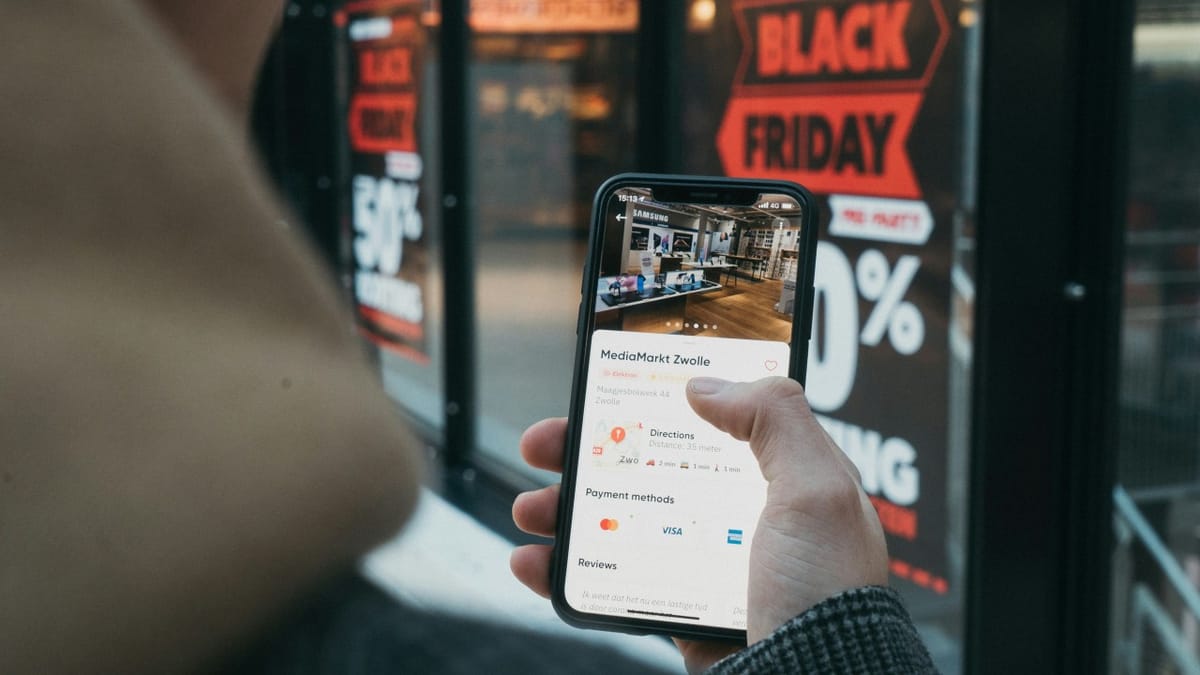
As I write this, Cyber Monday is in full force and expected to break retail sales records, as is Thanksgiving Weekend. But my, how things have changed.This may age me, but I remember when Black Friday was the kickoff to the holiday shopping season. Scenes like the image below were common and the frenzy for deals, especially the hot holiday items, were like a competitive sport...or at times, the Hunger Games.

Flash forward to 2024 and from my standpoint, Black Friday has lost its luster. Deals started popping up before Halloween with the premise of pre-Black Friday sales. Then came Amazon Prime Days which were matched by other retailers and the deals continued. This lead to Black Friday sales for the full week of Thanksgiving...maybe longer, and these deals continued past the sacred Black Friday shopping day, through the weekend and into Cyber Monday.
Holiday Shopping Observations from the Front Line
I spent some time in malls, outlet centers and other shopping venues over the last few weeks and here are my observations (keeping in mind that one set of eyes does not create definitive data points):
- An Omnichannel presence (I like Steve Dennis' Harmonized Retail as a better descriptor) is of extreme importance in order to be where and when your customers want to transact. Mobile shopping is on fire and will continue to be a focal point.
- The question isn't whether consumers will spend, its which players will capture the lions share of their wallets.
- What I saw was definitely the haves and the have-nots. Athleisure brands (think lululemon ) had lines queuing throughout the week, as did UGG , Pandora and other en vogue brands. Mass merchandisers and discounters were consistently crowded with bargain hunters galore. Luxury, electronics, and apparel like J Crew, Banana Republic and Ann Taylor...not so much.
- Experiential = customer service. Most retailers ramp up the experience during the holiday season, but high levels of customer service were winning the day and it was evident. The difference between the stellar service at Brooks Brothers and lululemon versus Kohls, Macys or Nike was significant.
- Retailers should not care whether people buy online or in-store, as long as they buy. Both experiences need to be frictionless or the consumer will go elsewhere. Advantage Walmart in so many ways!
IN THE NEWS:
For big-box retailers, one of the longest-running experiments is shrinking
As big-box retailers focus on providing to the consumer shopping experiences in multiple formats, Ikea is the latest to add smaller-footprint stores. The idea is not new: Target, Macy’s, and Nordstrom have all added smaller square-foot locations in recent years; Walmart debuted its Express store over a decade ago; and the last remaining Kmart in the U.S. is a smaller format store.
Gradual Recovery Continues as CRE Prices Stabilize
The US CRE market is gradually recovering as commercial property prices continued to stabilize in October on greater clarity about borrowing costs.
Gen Z Is Swimming in Debt, But Not Pressing Pause on BNPL Holiday Shopping
Members of Gen Z (those born between 1998 and 2012) may be reshaping retail, as Nielsen IQ suggested, but they’re doing so at great cost to their financial health.
Urban retail: the rising star of post-pandemic real estate investment
The surge in office occupancy, strong consumer demand and the return of foreign tourists across major U.S. cities is fueling a renaissance in urban retail.
NOSTALGIC RETAILER SPOTLIGHT: SERVICE MERCHANDISE
I created a whole series on nostalgic retail in previous LinkedIn posts. Want to see the entire series, or any you missed, click HERE.

I have personal interest in this one as I grew up with my family in the catalog showroom business in Georgia and the Carolinas, founded by my grandfather, Harold Ellman. The business was sold to Service Merchandise during my senior year in high school. (Ellman's)
Service Merchandise's was founded in 1934 as a small five-and-dime store by Harry and Mary Zimmerman in Pulaski, Tennessee. After leaving the wholesale business, they opened Service Merchandise in 1960 in downtown Nashville, Tennessee. Service Merchandise evolved into a chain of catalog showrooms that, at its peak, achieved more than $4 billion in annual sales.
Despite being early internet adopters and leading the way with e-commerce, the company lost significant market share to bog box retailers, especially electronics and mass merchandisers (Circuit City, Walmart, Bed Bath & Beyond and others)
While in the process of changing its product offerings and store layouts, a group of creditors forced an involuntary petition for bankruptcy under Chapter 11 bankruptcy in March of 1999.
"The company later filed a voluntary Chapter 11 petition to improve relations with its vendors and creditors in an effort to stabilize its business. Raymond Zimmerman, son of the original founders (who had been instrumental in the process of building the family business into a multibillion-dollar chain) resigned as chairman of the board in November 2000. The company attempted to pull itself out of bankruptcy once again in summer 2001, but the economic downturn following the September 11 attacks proved to be a hurdle the company could not clear. With only 200 catalog showrooms left, the stock valued at less than one cent per share, and no profitability in sight, Service Merchandise ceased operations and shuttered all of its remaining stores by early 2002." (Wikipedia)
For those of you who remember the conveyor belts and catalog ordering forms and the endless aisles of display merchandise, Service Merchandise was a true retail innovator and ahead of it time with many strategic initiatives. They definitely deserve a spot in the retailer hall of fame!