Experiential or Bust ⛓️💥
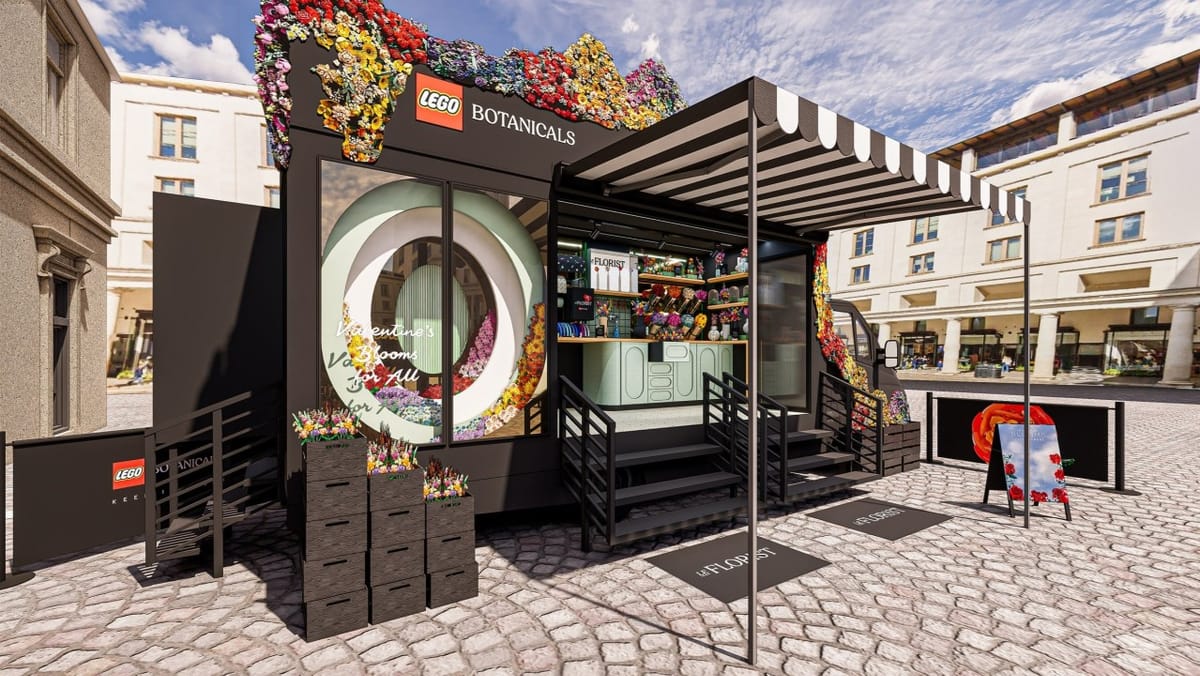
Experiential retail has emerged as the strategic tool for brick-and-mortar stores to attract and retain customers and combat the convenience of e-commerce. By creating immersive and engaging experiences, retailers can drive foot traffic, increase dwell time, and ultimately boost sales.
But, there are downsides to this focus for both the retailers and the property owners...

Here’s experiential retail's potential impact to properties and consumer behavior:
Positives (+)
1. Increased Dwell Time
Encourages customers to spend more time in stores, exploring interactive displays, attending workshops, or enjoying themed environments. This extended dwell time enhances customer engagement and satisfaction, leading to higher sales and loyalty.
2. Enhanced Foot Traffic
By transforming stores into destinations, experiential retail attracts more visitors who are seeking unique experiences. This not only increases foot traffic but also fosters a sense of community around the brand.
3. Data Collection and Personalization
Longer dwell times provide retailers with more opportunities to collect data on customer behavior and preferences. This data can be used to personalize marketing efforts and improve customer engagement, offering targeted promotions and services that align with individual interests.
4. Competitive Advantage
Experiential retail provides a tangible, memorable experience that DTC brands cannot replicate. By focusing on immersive experiences, retailers can differentiate themselves and attract customers seeking more than just a transactional experience.
Follow me for more insights on retail, real estate and consumer trends and strategies.
Negatives (-)
1. Higher Costs and Resource Intensity
Experiential retail requires significant investment in technology, design, and staffing to create immersive experiences. This can be resource-intensive and costly, particularly for smaller retailers or properties with limited budgets. It also puts technology in a position to either meet needs or try and create needs...the latter of which becomes hit or miss.
2. Potential Overemphasis on Experience
Overemphasizing experiential elements can detract from the core shopping experience if it becomes too immersive or complex, potentially frustrating customers who prioritize convenience and accessibility (I am talking to you order kiosks at fast feeders). Striking a balance between creating engaging experiences and maintaining an intuitive and accessible shopping environment is crucial.
3. Parking, Efficiency & Cross-Shopping
Experiential's increase in dwell time can cause parking issues and may not be advantageous where convenience retail is dominant. In addition, many experiential retailers become destinations and thus actually have a negative impact on cross-shopping as consumers become more apt to visit and then leave the location.
4. Return Business/Visits
There are only so many times people will axe throw, play neon putt-putt, or visit an immersive attraction. Thus, these become destinations with somewhat limited shelf lives, causing the concepts to morph, the experience to become jumbled and ultimately become a detraction versus an attraction. With these types of experiences, visits will likely decrease over time, especially after the honeymoon period is over. This struggle is real...just ask Top Golf!
So What?
Bringing people together, socialization, experiencing place as a community are all critically important to the future success of retail and real estate.
The keys:
- Experiences that do not feel gimmicky and have staying power
- Place creating socialization and not being only transactional
- Adaptation of development to account for this need in all sectors of #CRE
- Not allowing technology to over-power experience. Too many technologies are trying to create a need (with claims of efficiencies or better experiences) and end up pulling a resisting consumer along which backfires in the end.
IN THE NEWS
Why does every retailer have a coffee shop now?
"From Aritizia’s A-OK Cafe to Uniqlo’s new Uniqlo Coffee, clothing stores are using coffee to position themselves as lifestyle brands."
Finding Value in a Value-Already-Added World
"The value has been added at value-add retail properties in major markets, and now many investors and developers are turning to smaller cities and Class B and C properties."
Independent retailer ITS taps into new shopping experience with integration of store into its DC
"Tool retailer ITS has relocated its Harlow store to a larger location to accommodate a new shopping experience. Featuring a “Shop-in-Shop” format with dedicated areas for brands like DeWalt, Makita, Milwaukee, Festool, amd Bosch, the store at DC One, Edinburgh Way."
International Migration Driving Gateway City Growth
"Tenenbaum said that of the roughly 2.2 million people added to major MSAs in the United States last year, 2.1 million came from international migration, about 96% of total population growth."
Distress Rates are High in These Markets
"Despite signs of improvement in commercial real estate markets, including the office sector, distress remains prevalent in many metropolitan areas. CRED iQ analyzed the top 50 metropolitan statistical areas, focusing on the loans they track to determine the proportion of distressed loans. The distress rate is defined as the combined percentage of delinquent and specially serviced loans."
What CRE Investors Eye in 2025
"Seven in 10 U.S. investors said they intend to buy more commercial real estate this year than they did in 2024, according to a new survey from CBRE.
Nearly three in 10 said they would buy roughly the same amount, citing favorable pricing as trumping the rising cost of debt."
Nostalgic Restaurant Spotlight:
HOWARD JOHNSON'S

Go ahead...say it. This is a hotel chain, not a restaurant chain. Well, you are partially correct.
Howard Deering Johnson opened the first Howard Johnson's restaurant in Quincy, Massachusetts in 1925.
"The first Howard Johnson's restaurant received a tremendous boost in 1929, owing to an unusual set of circumstances: Malcolm Nichols, the mayor of nearby Boston, banned the production of Eugene O'Neill's play, Strange Interlude in Boston. Rather than fight the mayor, the Theatre Guild moved the production to the Wollaston Theatre in Quincy. The five-hour play was presented in two parts with a dinner break. The first Howard Johnson's restaurant was near the theater, and hundreds of influential Bostonians flocked to the restaurant. Through word of mouth, more Americans became familiar with the Howard Johnson Company." [Wikipedia]
Fighting through the Great Depression, Johnson persuaded a friend to open, what is considered to be, one of the first franchised restaurants in 1935.
As the U.S. entered WWII, there were over 200 locations but the war took its toll on business, shrinking the chain to 12 locations by 1944. With an aggressive expansion after the War, Howard Johnson's grew to 400 locations in 32 states by 1954.
1954 is also the year that the first motor lodge opened (hotel to you youngsters). With the company turned over to his 28-year old son in 1959, Howard Johnson's went public in 1961 with 605 restaurants (265 company-owned) and 88 motor lodges.
"By 1975, the Howard Johnson Company had more than 1,000 restaurants and more than 500 motor lodges in 42 states and Canada. The company reached its peak that year, but the late 1970s marked the beginning of the end for the Howard Johnson Company. Because of the oil embargo of 1973, the Howard Johnson's restaurants and motor lodges, which received 85% of revenue from travelers, lost profits when Americans could not afford long trips or frequent vacations." [Wikipedia]
In 1979 the company was acquired by Imperial Group PLC out of London for $630M (1040 restaurants and 520 motor lodges).
While the Lodges still exist (fewer than 140), the restaurants do not. Marriott's acquisition of the company in 1982 cause the closure of all company restaurants with the franchisees spinning off into their own organization. Struggling to survive through the 80s and 90s, there were less than 8 locations left by 2005. In September of 2016 the last restaurant closed.
Note: A restaurant existed in Lake George that claimed to be the "last Howard Johnson's restaurant standing" but this was questioned by most. Regardless, this location closed in March of 2022.