Experience vs. Enjoyment: The Distinction That Changes How You Evaluate Retail Tenants
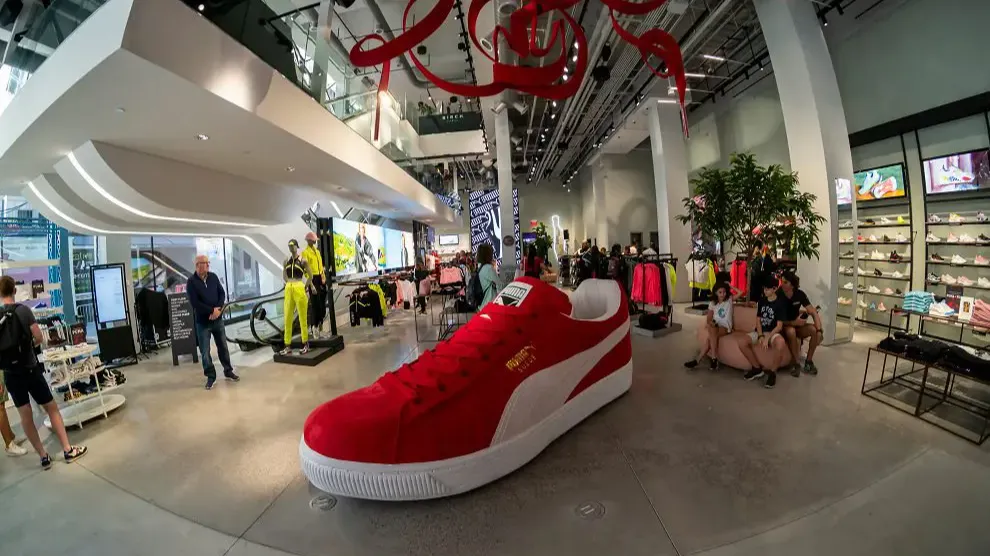
"Experiential retail" is the most overused term in CRE right now...And I think we're using it wrong.
Everyone talks about creating "experiences" for customers. Immersive moments. Instagram-worthy activations. The wow factor.
But here's what I keep seeing: the wow fades. Fast.
Axe throwing. Indoor putt-putt. Arcade concepts. Fad-driven retail like Labubu. Even TopGolf to some extent. These are 𝘦𝘹𝘱𝘦𝘳𝘪𝘦𝘯𝘤𝘦𝘴. You try them once, maybe twice. You post the photo. And then you move on.
Now compare that to LEGO stores. Starbucks Reserve. Gentle Monster. Meow Wolf. Netflix House.
What's different? These aren't just experiences. They're 𝘦𝘯𝘫𝘰𝘺𝘢𝘣𝘭𝘦. There's depth. Discovery. Layers that reward repeat visits. You don't just consume them, you engage with them.
The Distinction Matters:
𝗘𝘅𝗽𝗲𝗿𝗶𝗲𝗻𝗰𝗲 = one-time immersion. Novelty-driven. Fatigue risk is high.
𝗘𝗻𝗷𝗼𝘆𝗺𝗲𝗻𝘁 = sustainable engagement. Service-driven. Repeat visits built in.
Think about it this way: experience is what gets someone in the door. Enjoyment is what brings them back.
And then there's the service layer: Brooks Brothers, Sephora, Nordstrom. The enjoyment isn't the store design. It's the interaction. The expertise. The associate who remembers what you bought last time. The feeling that your needs are actually being met.
People will talk about how much they 𝘦𝘯𝘫𝘰𝘺𝘦𝘥 a visit long after they've forgotten the "experience." And studies back this up.
My challenge:
We have the data to measure this. Foot traffic patterns. Dwell time. Repeat visit rates. Sentiment analysis of reviews. Persona data. The tools exist.
Are you using them?
When evaluating tenants, are you asking: "Is this an experience or is this enjoyable?" Are you tracking which concepts sustain traffic over 18 months vs. which ones spike and fade after six?
Because if you are just chasing "experiential" without understanding what actually keeps people coming back, you're setting yourselves up for churn. You are signing leases based on buzzwords instead of behavioral data.
The buzzword isn't the strategy. The data should be.
IN THE NEWS
2026 Retail Industry Global Outlook - Deloitte
"Five dynamics are expected to reshape the retail industry in 2026, demanding agility, intelligence, and discipline in an increasingly AI-led marketplace"
Commercial real estate deals are picking up, but so are concerns about AI
"Anxiety over the technology moves across industries, now touching on property"
Most commercial real estate investors planning to buy more this year: CBRE
"A new survey from CBRE paints a rosy picture for the commercial real estate market in 2026, with virtually all investors surveyed by the firm indicating they're planning to increase or at least maintain their allocations to the sector."
Amazon’s Andy Jassy Just Named His Biggest Threat—It’s Not A Retailer
"Amazon's CEO made a revealing admission on his latest earnings call. The biggest competitive threat he's worried about isn't another retailer."
What Will Define Industrial’s Next Stage of Growth?
"After years of rapid expansion, the sector enters 2026 focused on efficiency, power availability and long-term resiliency. Here's what to watch."
Nostalgic Retail Spotlight:
DISCOVERY CHANNEL STORE

165 stores. T-Rex skeletons. Telescopes. Losing $30 million a year.
If you walked through a mall in the late 90s, you probably stopped at the Discovery Channel Store. Fossils. Science kits. Nature documentaries on VHS.
Discovery Communications built it as a brand extension. Retail as marketing. It worked. Until it didn't.
A Timeline:
- 1995: Discovery Channel Store launches with 11 locations.
- 1996: Discovery acquires The Nature Company's 110 stores for $40 million. Rebranding begins.
- 1998: 30,000 sq ft flagship opens in Washington, D.C. - T-Rex skeleton, WWII bomber nose, 82-seat theater. $10 million over budget.
- 2000: Chain peaks at 165 stores. Ranked #1 most trusted brand in America.
- 2007: 𝘋𝘪𝘴𝘤𝘰𝘷𝘦𝘳𝘺 𝘢𝘯𝘯𝘰𝘶𝘯𝘤𝘦𝘴 𝘤𝘭𝘰𝘴𝘶𝘳𝘦 𝘰𝘧 𝘢𝘭𝘭 103 𝘳𝘦𝘮𝘢𝘪𝘯𝘪𝘯𝘨 𝘴𝘵𝘰𝘳𝘦𝘴. 1,000 employees laid off; 25% of the company's workforce.
Lessons Learned:
- Brand extension doesn't guarantee retail success. Disney and Warner Bros. tried the same playbook. Most failed.
- $30 million in annual losses couldn't be justified as "marketing spend" forever. New CEO Dave Zaslav was brought in to cut costs. Retail was first on the chopping block.
- The product was experiential, but the economics weren't. Selling telescopes and fossils at mall rents doesn't scale.
Discovery Channel's online store survived. The airport locations out-lived the mall locations briefly through a partnership with Hudson Group, but met the same fate.