Can We Bet on the Future of Retail?

The Rise of Prediction Markets as a #CRE and #Retail Data Source
The CRE industry has traditionally relied on a familiar forecasting toolkit: historical sales data, comps, macroeconomic models, demographic data, and good old-fashioned gut instinct. That has changed recently with the introduction of more refined persona data, mobile location data, credit card data, and the obvious impact of #AI.
But what if there was another way to anticipate consumer trends, tenant demand, and market shifts? One that aggregates the collective intelligence of thousands of people putting real money behind their predictions?
Welcome to prediction markets.
What are Prediction Markets?
At their core, prediction markets are platforms where participants buy and sell contracts based on the likelihood of future events. Think of them like stock markets, but instead of trading company shares, you're trading on outcomes: Will inflation exceed 4% this year? Will a particular product category see growth? Will interest rates rise? Who will win the basketball game?
The price of a contract reflects the crowd's collective probability estimate. A contract trading at $0.65 implies a 65% likelihood of that outcome occurring. When the event resolves, correct predictions pay out.
The key difference from traditional surveys or expert forecasts? Participants have skin in the game. They're incentivized to be accurate, not just opinionated.
The Potential for CRE & Retail
Platforms now exist that aggregate and sell prediction market order data, positioning it as a new alternative data source alongside demographics, persona data, credit card transactions, and others.
The potential applications are intriguing:
Economic Indicators: Prediction markets tracking Fed interest rate decisions or inflation trends could help investors anticipate financing costs. With nearly $1 trillion in commercial loans maturing last year (2025), understanding these shifts matters.
Consumer Trend Forecasting: Could aggregated betting behavior on product categories, cultural shifts, or retail concepts signal where consumer preferences are heading?
Tenant Demand Signals: One could imagine prediction market scenarios where people bet on outcomes like tenant mix or tenant/category success, an adaptation of what companies like General Mills have tested for product forecasting.
Zoning & Regulatory Changes: Micro-prediction markets could theoretically offer crowd-sourced insights into the likelihood of zoning changes or policy shifts affecting property values.
The "wisdom of crowds" concept isn't new. Research has shown that prediction markets have outperformed traditional forecasting methods in areas ranging from political elections to corporate earnings.
The Reality Check
Before we get too excited, the evidence is mixed.
A study conducted with General Mills employees found that prediction markets, while able to access more information than traditional processes, didn't produce significantly more accurate short-term consumer product forecasts. Participants changed their minds over time, which actually degraded overall accuracy.
Another academic study found that when properly aggregated, simple self-reported beliefs were just as accurate as prediction market prices and combining both approaches worked better than either alone.
And there's the fundamental challenge: prediction markets work best when there's sufficient liquidity and diverse participation. For niche CRE questions (like the probability of a specific tenant renewing a lease or a particular submarket outperforming) the crowd may simply be too small or too uninformed to generate meaningful signal.
Where Might This Actually Work?
The sweet spot seems to be broader economic and consumer trend forecasting rather than hyper-local CRE decisions.
- Macro indicators (interest rates, inflation, recession probability) where prediction markets already have deep liquidity
- Consumer sentiment shifts that could signal category-level retail trends
- Cultural and demographic changes that play out over longer time horizons
For site selection, tenant mix decisions, and property-level underwriting? Traditional data sources aren't going anywhere, but it sure is interesting to think of the possibilities.
Summing It All Up
Prediction markets represent an interesting frontier in alternative data. The concept of aggregating capital-weighted beliefs into real-time probabilities has theoretical appeal, and the infrastructure to access this data is maturing.
But like any emerging data source, the question isn't whether it's interesting...it's whether it's actionable.
For CRE professionals, my take is this: worth watching, worth experimenting with for macro trend analysis, but not yet a replacement for the fundamentals. The "see-touch-and-feel" nature of our business still requires local expertise, relationship intelligence, and boots-on-the-ground insights that no prediction market can replicate.
The crowd may be wise. But the crowd doesn't know your submarket like you do. (Or do they?)What's your take? Have you seen prediction market data being used in CRE or retail decision-making? I'd love to hear what you're seeing at #TheCornerOfMainAndMain.
IN THE NEWS
Restaurants in 2026: Labor, Tech, and Service Trends to Watch (VIDEO)
"In this episode of Take-Away with Sam Oches, Sam talks with Michelle Korsmo, president and CEO of the National Restaurant Association, an organization that represents hundreds of thousands of restaurants at all levels of government"
"For much of the past few years, CVS was treated as a problem stock. But new earnings show a promised comeback is actually happening"
AI is Likely Another Inflection Point for Brick-and-Mortar Stores
"Every time physical retail has faced charges of obsolescence, it has adapted."
The BLS Revision: What it Signals for Commercial Real Estate
"On February 11, the Bureau of Labor Statistics released its January job numbers, noting that non-farm payroll employment increased by 130,000. In the same release, the BLS reported that, rather than the 584,000 jobs gained in 2025, the revised total was 181,000."
Gen Z Postmaterialism Is Quietly Disrupting The Retail Industry
"Gen Z is looking a lot like the hippie era of the mid-1960s to early 1970s when Boomers embraced postmaterialism. “Back to the land” was the vibe, and the “in” fashion look swung from status and bling to rugged and reused."
Nostalgic Retail Spotlight:
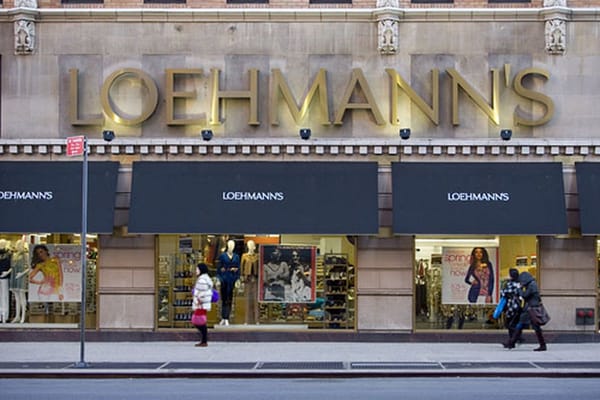
LOEHMANN'S

If you've ever stripped down to you underwear in a room full of strangers fighting over a marked-down Donna Karan, you know exactly what Loehmann's was.
Frieda Loehmann, a former department store buyer, opens the first store in 1921 in Brooklyn with her son Charles. Her strategy? Pay cash for designer overstock and samples, sell them at deep discounts. No returns. No alterations. Cash only.
The Timeline:
- 𝟭𝟵𝟯𝟬: Charles opens a second location on Fordham Road in the Bronx. The model spreads.
- 𝟭𝟵𝟲𝟮: Frieda dies at 88. The company goes public in 1964 and begins aggressive expansion beyond New York.
- 𝟭𝟵𝟴𝟯-𝟭𝟵𝟴𝟴: Ownership carousel begins. Associated Dry Goods acquires them. May Department Stores absorbs Associated. May sells to a Spanish investor group.
- 𝟭𝟵𝟵𝟵: Peak at ~100 stores. First bankruptcy filing.
- 𝟮𝟬𝟭𝟬: Second bankruptcy.
- 𝟮𝟬𝟭𝟯: Third bankruptcy. This time, no comeback.
- 𝟮𝟬𝟭𝟰: All 39 remaining stores liquidated. 93 years of retail history, gone.
- 𝟮𝟬𝟮𝟱: Century 21 acquires the brand and launches pop-up sales. The treasure hunt lives on... sort of.
What Made Loehmann's Special:
𝘛𝘩𝘦 𝘉𝘢𝘤𝘬 𝘙𝘰𝘰𝘮. That's where the real finds were. Calvin Klein. Armani. Oscar de la Renta. Labels often cut out to protect designer relationships. You had to know quality by touch, not tag.
𝘛𝘩𝘦 𝘊𝘰𝘮𝘮𝘶𝘯𝘢𝘭 𝘋𝘳𝘦𝘴𝘴𝘪𝘯𝘨 𝘙𝘰𝘰𝘮𝘴. No stalls. No privacy. Just rows of benches and strangers offering unsolicited opinions on whether that blazer fit. It was chaos. It was community. It was a rite of passage.
The Nostalgia
Loehmann's invented off-price retail before TJ Maxx and Marshalls existed. But they couldn't evolve fast enough. The treasure hunt model that built them became table stakes. When everyone offers 60% off designer, what's your edge?
Frieda Loehmann proved you could build an empire on overstock. Three bankruptcies later, her successors proved you can't coast on legacy alone.